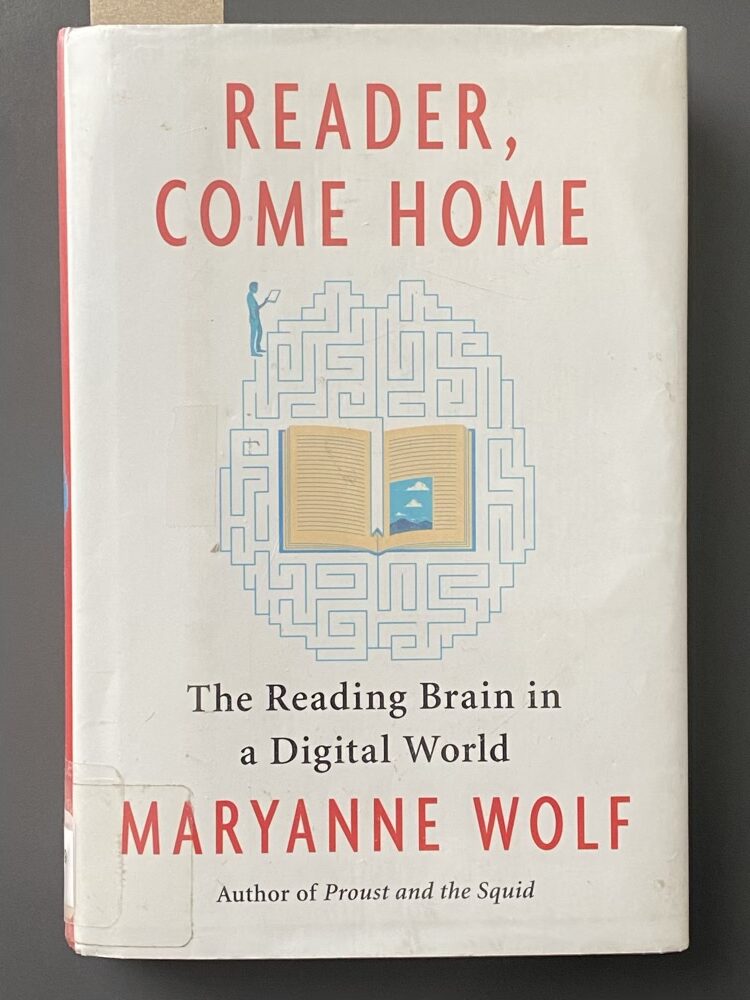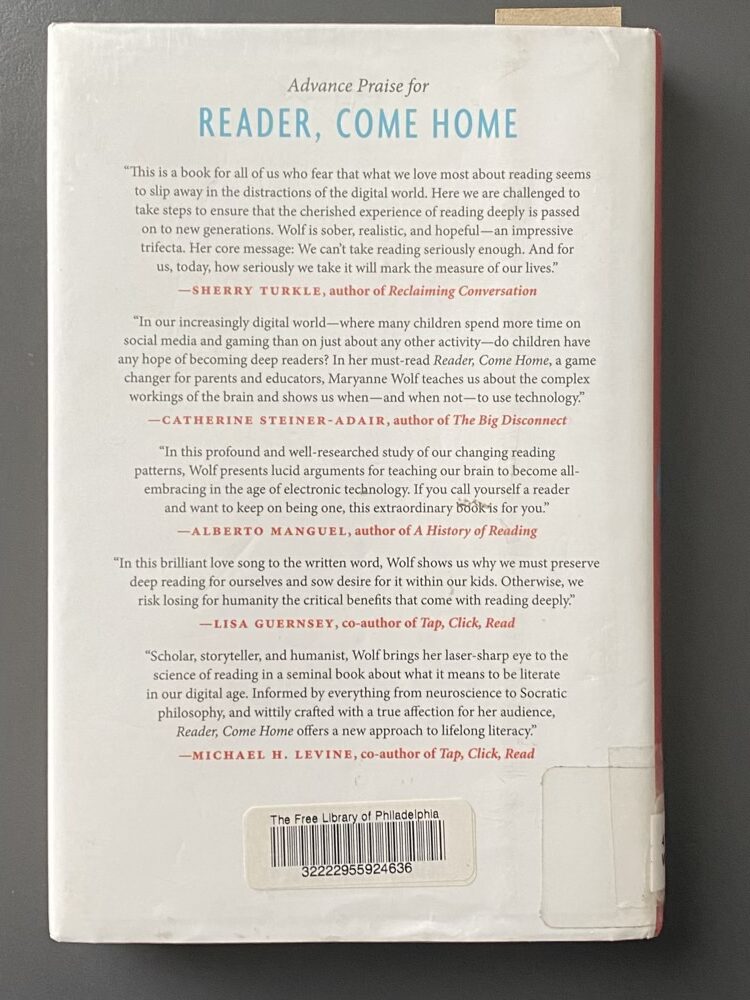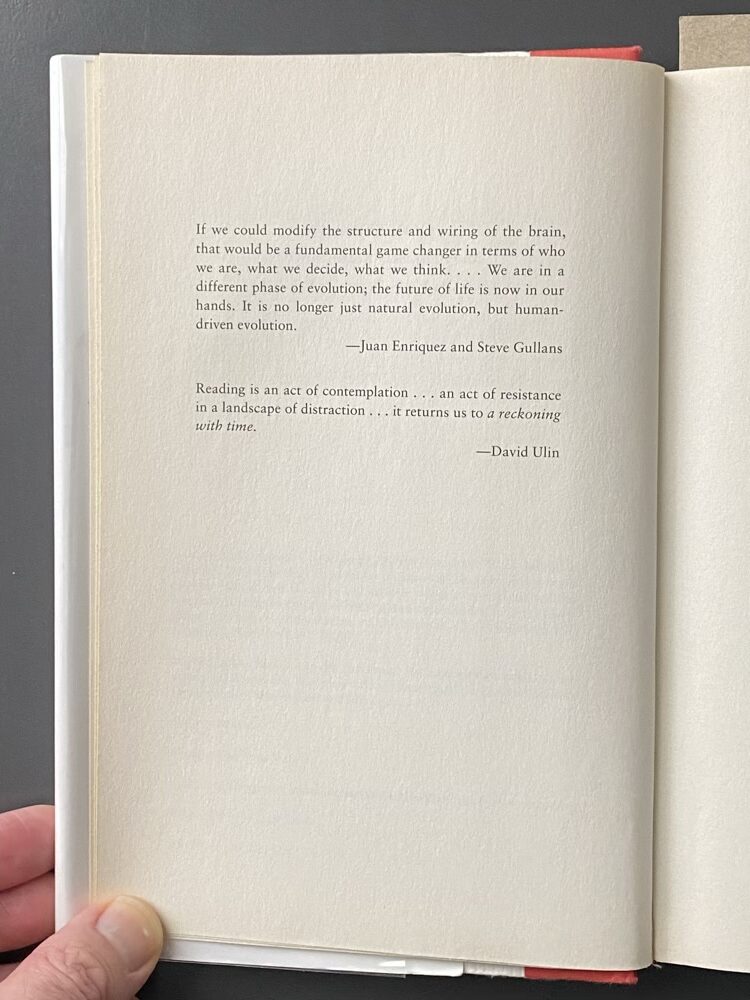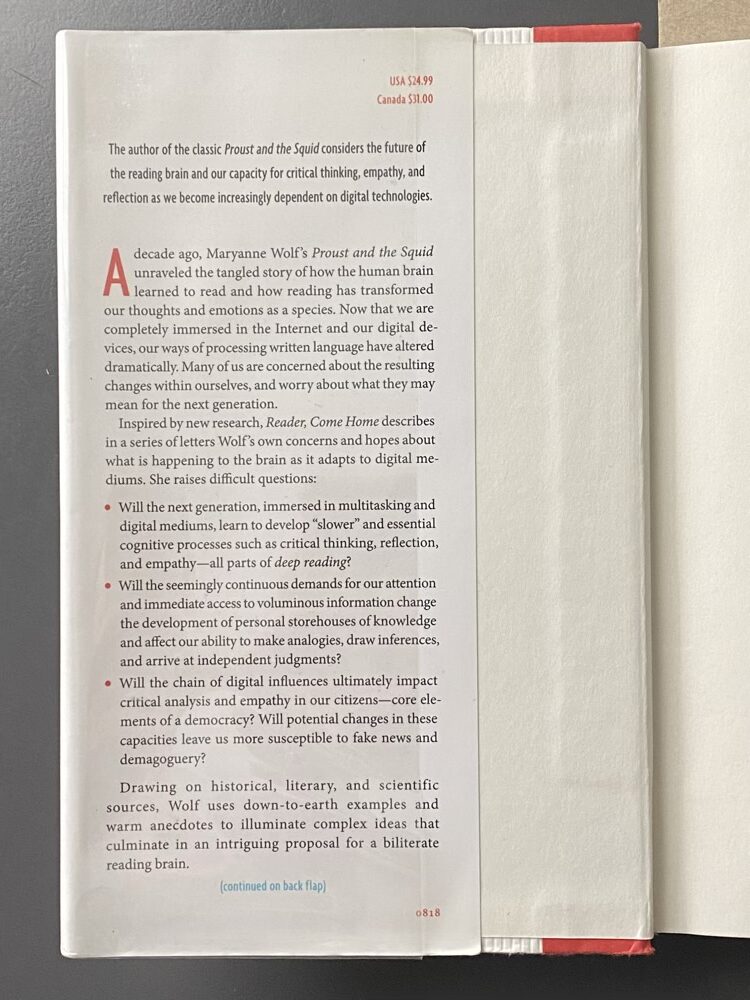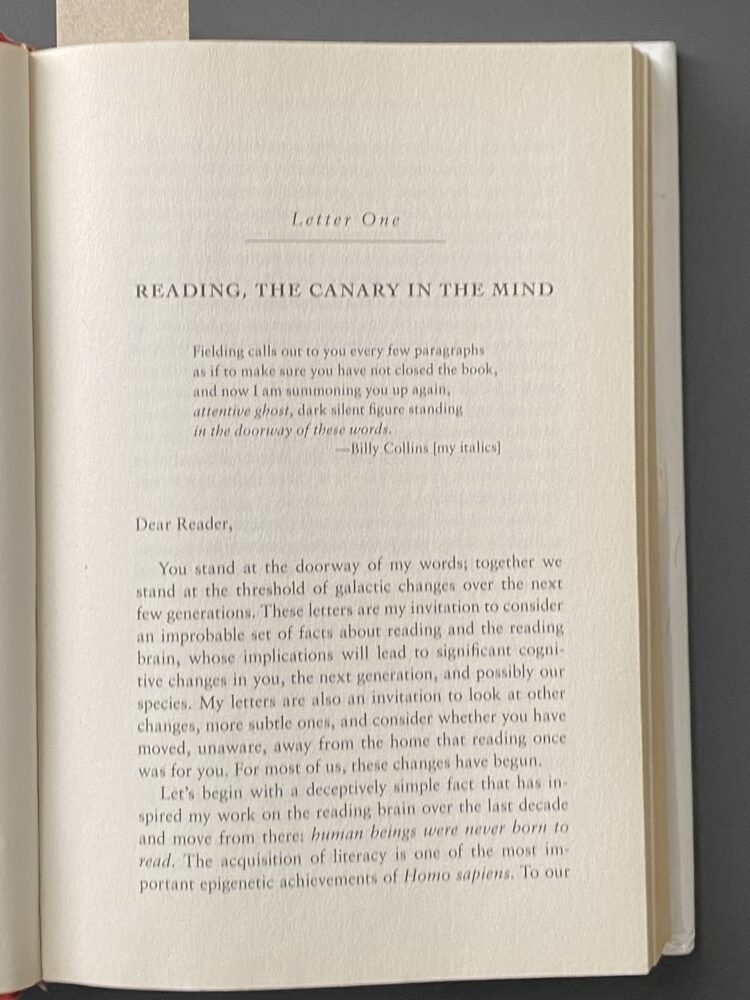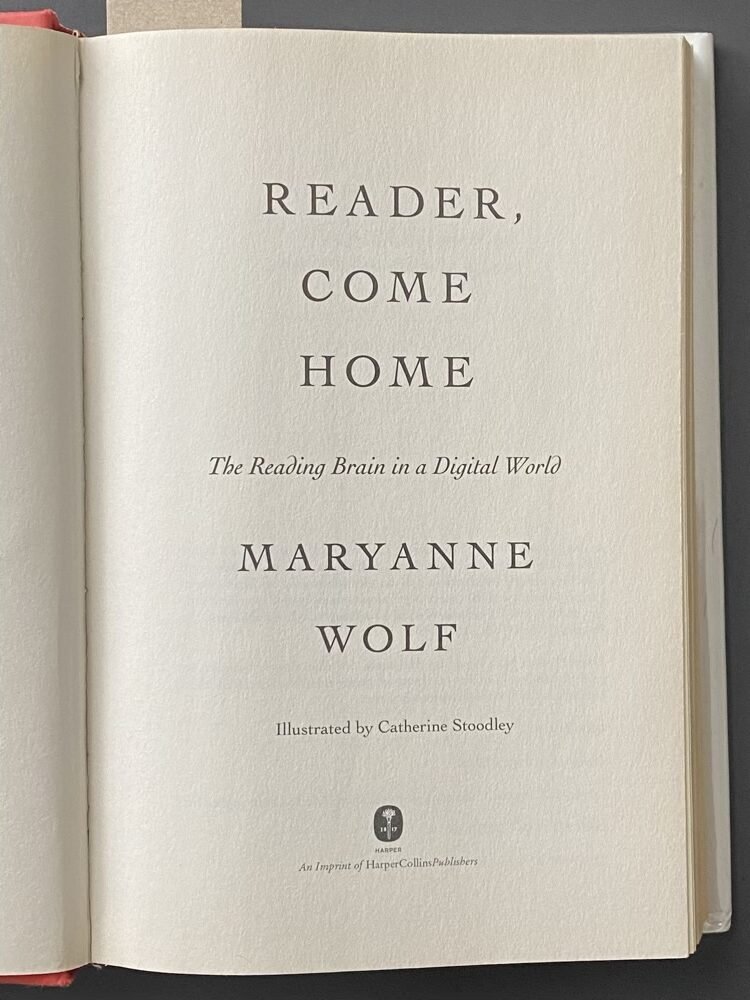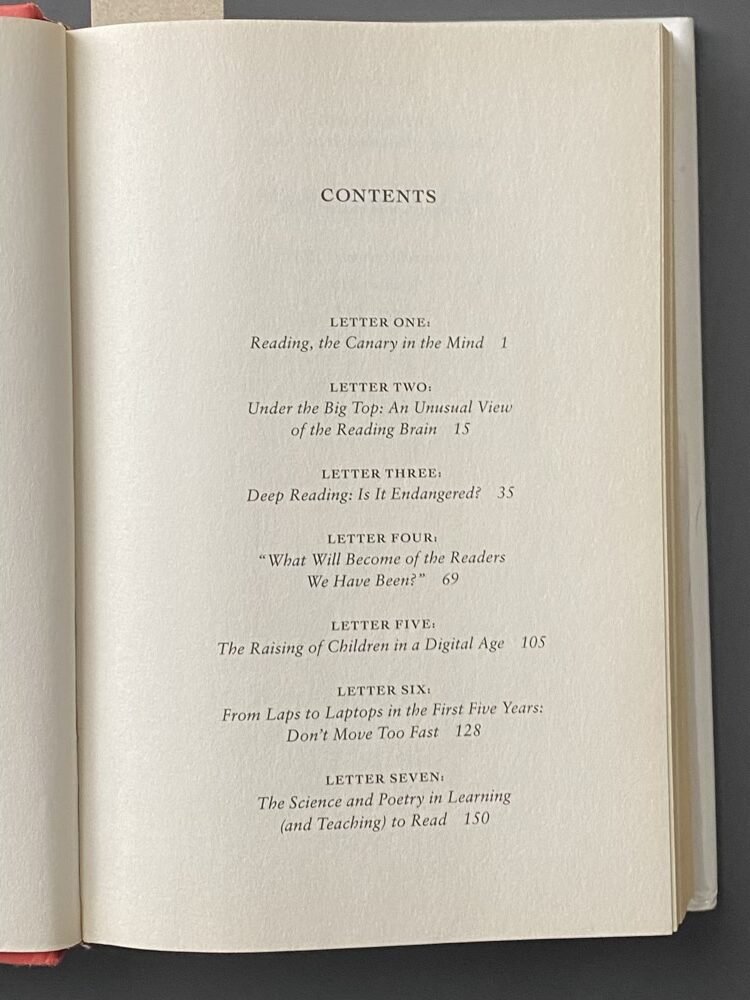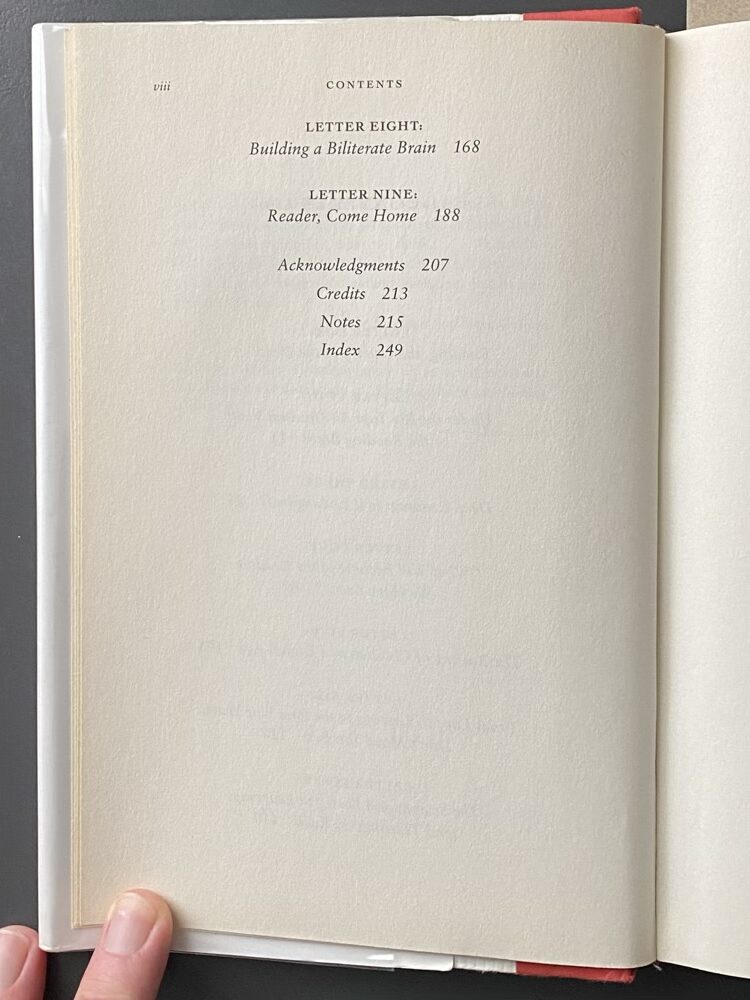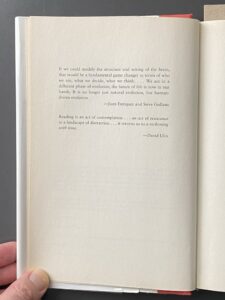
Having recently completed The Science of Reading by Adrian Johns and being inspired — that is the right word for that book — by it, I am continuing my education about reading, and, hence, acquired Maryanne Wolf’s Reader Come Home.
Reading, this activity that I’ve been doing for the near whole of my life and the one about which I may know the least.
I have only read some four letters but I am a little disenchanted, a feeling that frustrates me particularly when I have built up such excitement about reading a book.
Why Were You Excited About Reading This?
It was not because of the title, which I feel is a little hokey and sort of distracting. But when I learned of the author’s credentials and especially her background with dyslexia research I was keenly excited to think about the plasticity of cognition, neurodivergence, etc.
First Letter on Neuroplasticity
One of the first claims that Wolf makes concerns how humans were not wired for reading and that this is … unnatural and is a kind of anthropological difference* (okay, she didn’t explicitly say this, but it’s definitely there). This is something worth thinking about.
So Why Are You Disenchanted?
In point of fact, I think there is no point where I am in disagreement with the author in her conclusions.
So it’s not the conclusions, but the premises.
Perhaps the presentation, were that different from the premises?
1. Epistolary Format Without Intimacy
The presumption of the epistolary format is intimacy, if anything! The letter is directed to an individual, a specific person. This is no spray and pray.
Certainly, the author does use the first person plural frequently as well as the occasional first person singular. Those expectations are satisfied.
But is intimacy thereby achieved? I would say no.
2. Repeated, Excessive Name Dropping
And namedropping is the right word for it: “… philosopher Bob Shitlips … literary critic Sheila Shitlips … the late editor of the Süddeutche Zeitung Günter Keinernazi … “
Ad absurdam. Ad nauseum.
Perhaps it’s because of the excessive name dropping that I feel that intimacy is denied, because, were someone to write intimately, no need to credentialize each referent exists.
To the contrary, by the code of epistolary intimacy, an expectation of good will is manifest. I am being entrusted with the most valuable currency of all: ideas.
Ideas do not need authors for their value to be assessed, particularly when good will is a condition.
Or, maybe no such intimacy obtains?
3. A Frenetic, Elliptical Pace of Ideas
Another claim Wolf makes again and again — and to which I find myself the choir to her preacher — is that the constant bombardment with varied forms of “information” (memes, Youtube Shorts, Toks, tweets, direct messages, emojis, phone calls, etc.) are deleterious for our powers of intentional attention.
In short, we cannot concentrate on a single thing for a long period of time. Instead, contemporary human consciousness skips along like an MTV video (haha, no one knows what those are anymore) or a Michael Bay movie (the deafening stupidity of the Transformers franchise, zum Beispiel), from one object to another with little sense of continuity.
And yet, I feel like the chapters of this book suffer from that same frenetic, elliptical movement of ideas, from one to the next, none of which receiving adequate treatment.
Are You Going to Keep Reading?
Probably. It’s an easy read, mostly. But I have put it down for days for the sake of reading Euripides …
* By anthropological difference, I describe how humans are distinct from other species. In the history of philosophy this idea appears time and again as different thinkers express their anxiety that humans are not quite different from other beasts and that again and again we must fortify this separation from all of nature.
Of course, I’m poking some fun here. But I think I’m mostly on target. They do seem to be anxious about this and they definitely are concerned to establish this point of separation.