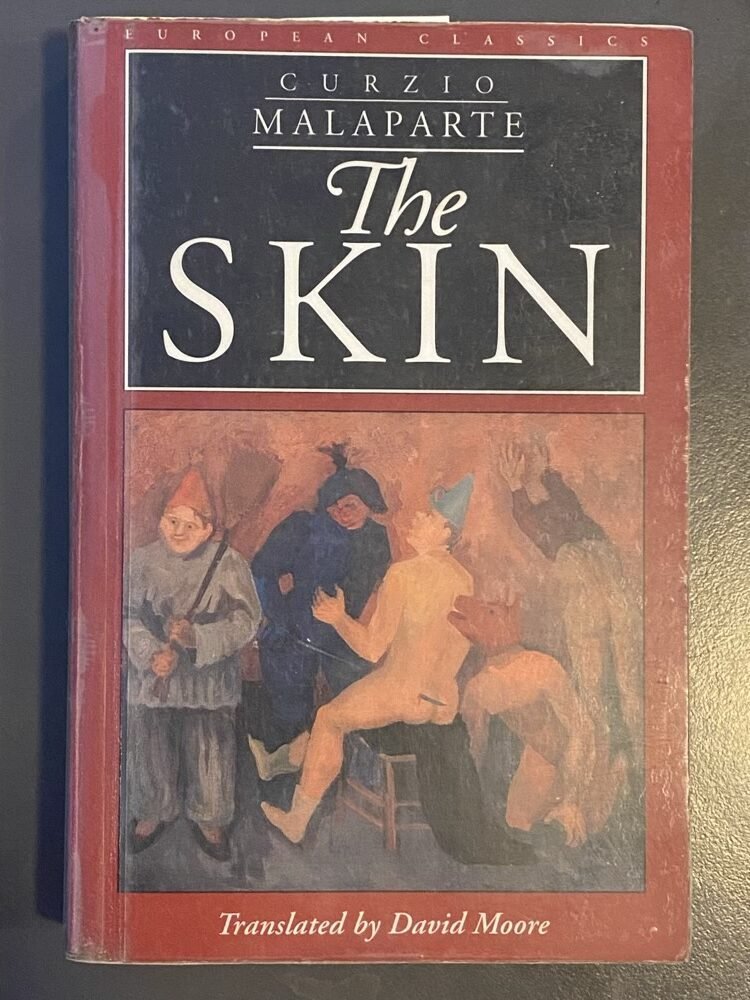
Read because of The Kremlin Ball, which was not even a novel but a collection of notes for a novel.
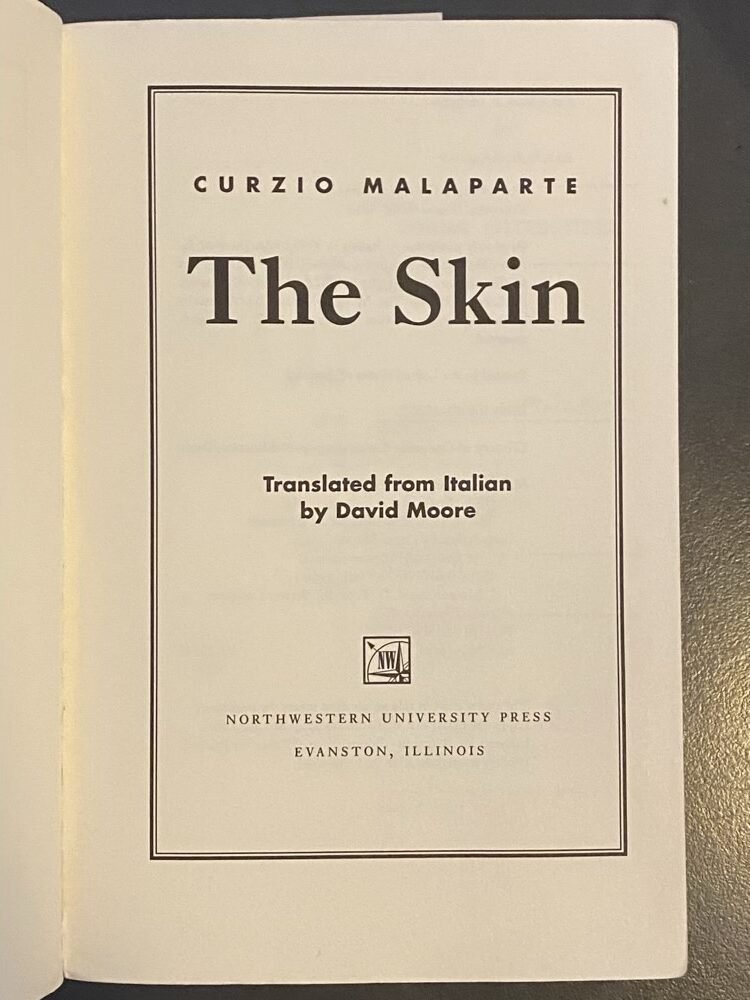
When you read The Skin, you see how far The Kremlin Ball was from being a novel.
The Skin is in all respects a novel, composed of a chronological narrative in quite fine detail of a couple of years of the author’s life. It is also a memoir. Of sorts. But Malaparte is too clever to get embroiled in facile questions asking after what portions were real and what were invented. He’s a literary man with a knowledge of history. The latter doesn’t mean who shot who at the Embarcadero in 1871.*
I guess I would be shocked to learn that he believed literature bears witness.
This is not to say that witness is superfluous.
Literature’s powers far exceed bearing witness. In fact, I wonder if the latter is any business of literature at all!
The Skin describes the American invasion of Italy in 1943. Malaparte’s person is a guide to the Americans moving north from Sicily.
In one of the concluding chapters, his person is at a lunch held by French military staff, this after they had crusted a mountain, revealing Rome. A moment when they speak in French ** and imagine Bonaparte’s works, Stendhal’s judgment.
During the lunch, the military staff begin wondering aloud how much of Kaputt, an earlier novel, was invented. Asking and sort of stabbing Malaparte with words. His person remains silent.
Until, he has to confess that he knows where the missing hand of a soldier just injured in a mine explosion has landed. In fact, it was somehow found on Malaparte’s plate amongst his dish. Because of his training, he would not interrupt the meal offered to him by his betters to make that observation, but had to eat the hand, leaving only the bones. He displays them to his dining companions.
One feature of The Skin that I especially enjoyed was the author’s talent for creating scenes. The memorable ones, like above, frequently occur in social events — a dinner, a gathering of friends.
A formal dinner where Malaparte reports the different Italian locales where this fish is caught, that ham prepared. The painting above the diners, presenting historical figures and explanations of minor features therein.
The title is a reference to the chapter “The Flag” in which a local man, like all of his neighbors welcoming the Americans into his city, runs a lot alongside a tank driving through.
But the man is somehow pulled beneath the tracks of the tank and killed. His body becomes nothing but a paper, a skin.
It’s a tragic episode and, like above, the author’s talent is in leveling his pen at the remains, and at all of what he has to happen after this man was accidentally killed by the people liberating him.
The Skin is a novel, but it is a sort of episodic novel. We know, we think, where this novel intends … Not really.
After repeated scenes of war, how does the author complete his work?
Indications are that Malaparte had to be hospitalized after two people he had been guiding were killed.
So I conclude.
When he leaves the hospital, he goes to stay with a doctor friend. The doctor installs Malaparte in his office, but the office has a collection of jars of fetuses in chemicals.
The fetuses put the author on trial.
The imagery is forceful, perhaps excessively. I opine that it leaves anything the author says for himself wanting and inadequate.
This person/narrator, whenever he speaks, exclaims glib but provocative statement after statement. Such a narrator can say nothing that is not tinged with this doubt, duplicity.
These are not confessions and no judgment arrives.
* A character in Vertigo is a local historian who knows things like “who shot who at the Embarcadero in 1871.”
** I prefer that the French is not translated — this is a feature of the Northwestern Press editions of this novel but not the NYRB’s newer ones.