

Quentin Tarantino’s love for old cheap B movies is on lurid display in his 2007 film Death Proof, as well as another opportunity to assess his treatment of female characters and women in general.
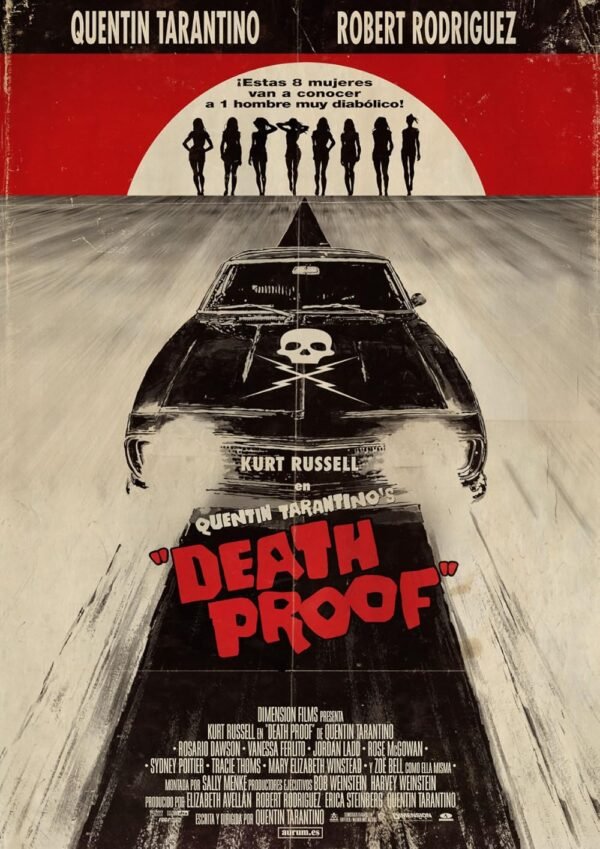
— Death Proof (2007), 96 min.
Directed and written by Quentin Tarantino.
Starring Kurt Russell, Zoë Bell, Rosario Dawson, Vanessa Ferlito, Sydney Tamiia Poitier, Tracie Thoms, and Mary Elizabeth Winstead.
Released in the United States on April 6, 2007.
The film was released theatrically as part of Grindhouse, a double feature that combined Death Proof with Robert Rodriguez’s Planet Terror.
Mainly, of course, this film is a love letter to film history, or what Tarantino considers film history. Death Proof is just a single example, of course, but many of his films have made frequent references to this history, not least Django and the Kill Bill series.
As well, it’d be a mistake not to appreciate that Tarantino has addressed race and sex in several different films, but especially in the latter.
Is Jackie Brown Progressive?
One of my favorite Tarantino films is Jackie Brown (1997), which I’ve been saying, to anyone who would listen, is a sophisticated and sympathetic portrait of a female character — namely, the title character, played by Pam Grier. Moreover, Grier is a good example of an actress exploited in films for her sex appeal and then largely forgotten until Tarantino gave her career a shot in the arm. So Tarantino did a solid for one of the women instrumentalized by Hollywood … and that is laudable … maybe?
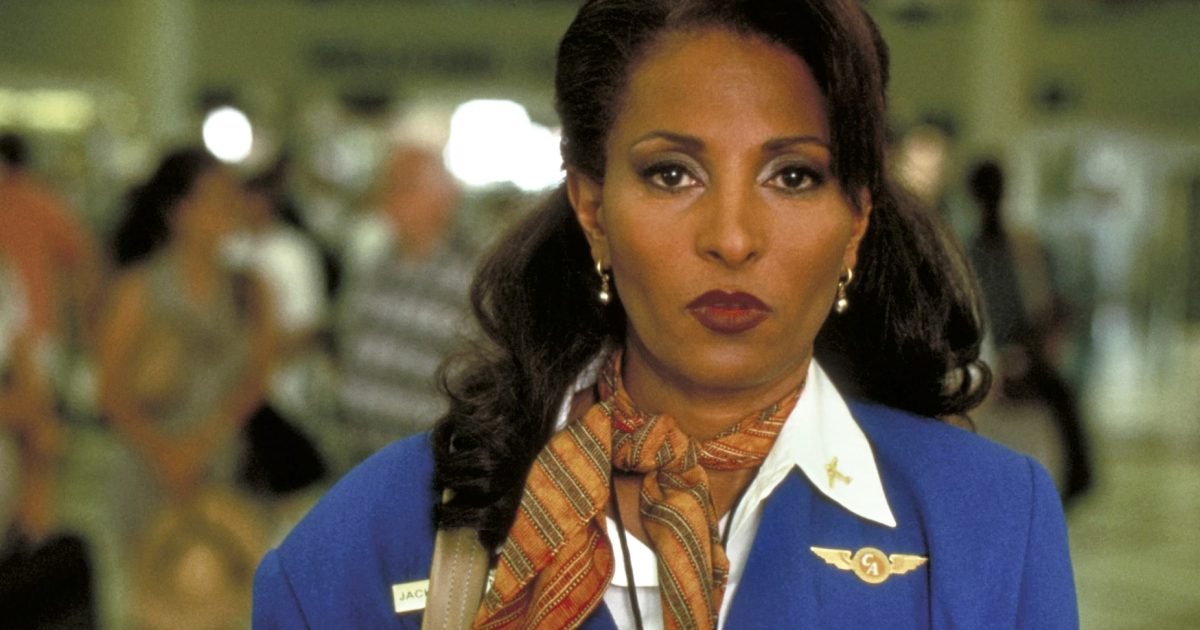
But one might very well gainsay this description of Jackie Brown, pointing out that the title character has less screen time than her gun dealing antagonist, played by Samuel Jackson. As well, this character only gets ahead by double-crossing that same character who had used her to bring cash into the country.
In sum, Jackie Brown is primarily a woman in a world dominated by men of dubious character (with the exception of Robert Forster’s bail bondsman and possible boyfriend).
Is Jackie Brown Tarantino’s “Straight Story”?
Tarantino’s early films were a vital part of my education in film and I cannot lie that I appreciated many of them. But as I’ve grown older, my sense of the larger contribution that Tarantino has made is more doubtful. If someone asked me to name important late 20th-century filmmakers, I’m not sure his name would be on the list.
But I do think that Jackie Brown is the closet Tarantino ever got to trying to make something that didn’t just (that means that it did, but it did more than that) retread film history.
Brown is not a great film: it’s ending lacks meaningful resolution and its characters are mostly pretty loathesome.
Is Occasional Violence Against Women Okay?
The answer to this is clearly no. Recall that in Jackie Brown the other female character, played by Bridget Fonda, is a long-legged sexual object of Jackson’s gun dealer, who is killed by his friend (played by Robert DeNiro) when she becomes difficult.
There are no women in Jackie Brown who are successful on their own merits, and there is almost no dialogue between women speaking with other women — one principal feature of Death Proof.
Tarantino’s Oeuvre Repeatedly Enjoys Violence Against Women
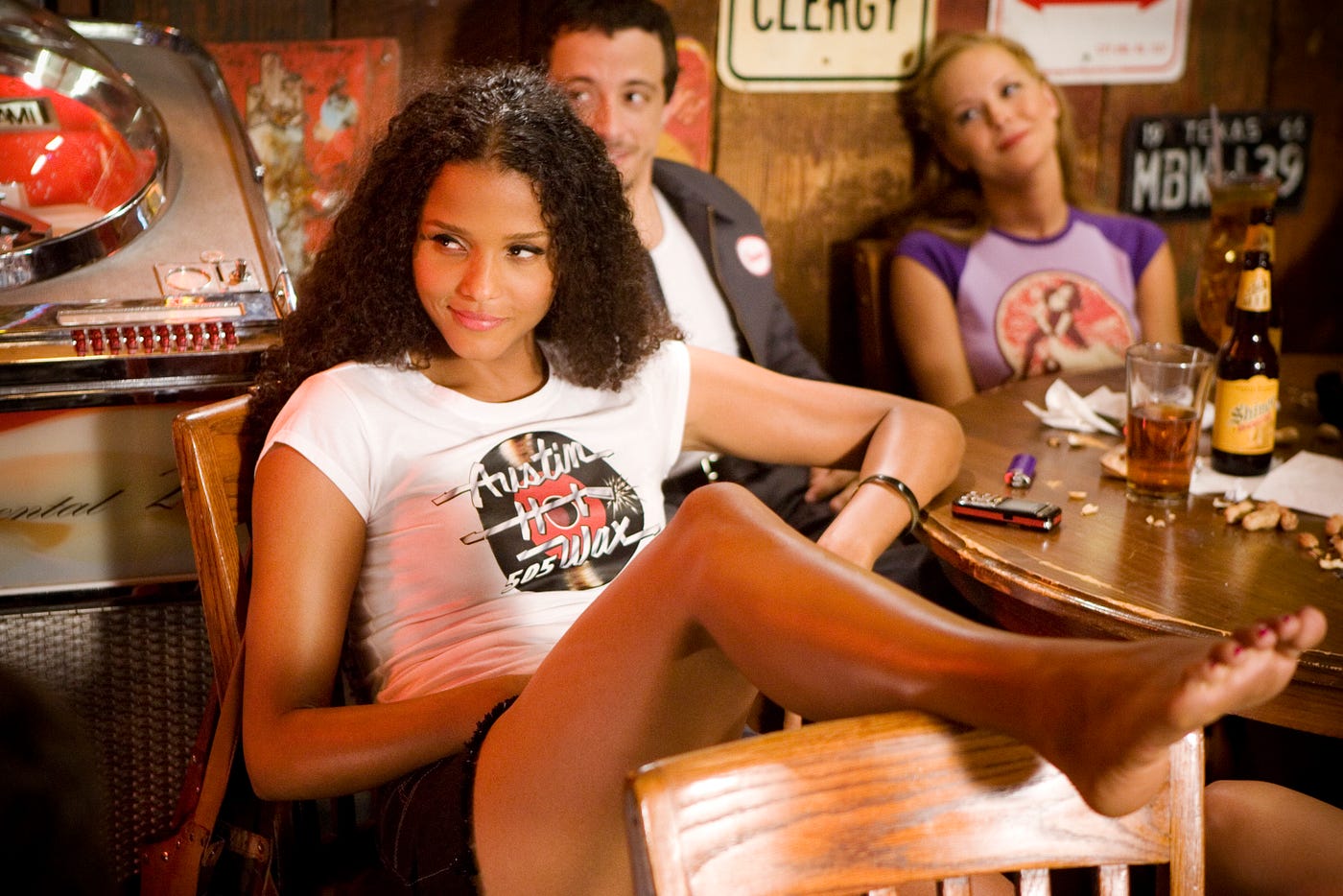
But the film Jackie Brown’s killing of Fonda’s character is by no means the exception, in terms of the litany of scenes of female violence.
Recall that his films of female empowerment — Kill Bill 1 & 2 — are both based in revenge for what appears to be the killing of a girlfriend by her kungfu-trained, assasination-squad-leading boyfriend. Since that same assassin-squad is full of women, all of them must die before the end of the film.
In other words, the female body count is pretty high.
Is Death Proof Progressive?
And here it’s an easy no.
Death Proof does include several strong, potentially interesting female characters, including Zoë Bell and the characters played by Vanessa Ferlito, Rosario Dawson, Sydney Tamiia Poitier, Mary Elizabeth Winstead, Rose McGowan, and Tracie Thoms. But their dialogue, which occupies a majority of the film’s run time, fails the Bechdel test again and again. And to be honest, it’s really boring.
As well, five women have to die before the emasculated antagonist Stuntman Mike (Kurt Russell) gets the payback he deserves, at the hands of three other women.
Interesting Aside: Mike’s Crying In Pain
One feature of Death Proof that stood out to me occurred when Stuntman Mike is able to stop, after having been shot by Thoms’ character, and loudly express his pain after having been shot. Although I don’t think Russell would know, I would assume that being shot is very painful and that most people express this pain.
Of course, in Death Proof I think the main function of this scene is to emasculate Mike in advance, before he’s set upon by the female characters.
But note that the women who deliver justice are stunt-women (Bell and Thoms), which in part means that they must demonstrate the same physical power, as opposed to the hairdresser character played by Dawson or the dumb actress played by Winstead (honestly, how dumb did this character have to be?!). But they deliver this justice wearing very tight t-shirts and short shorts.
Is a Lap Dance Progressive?!
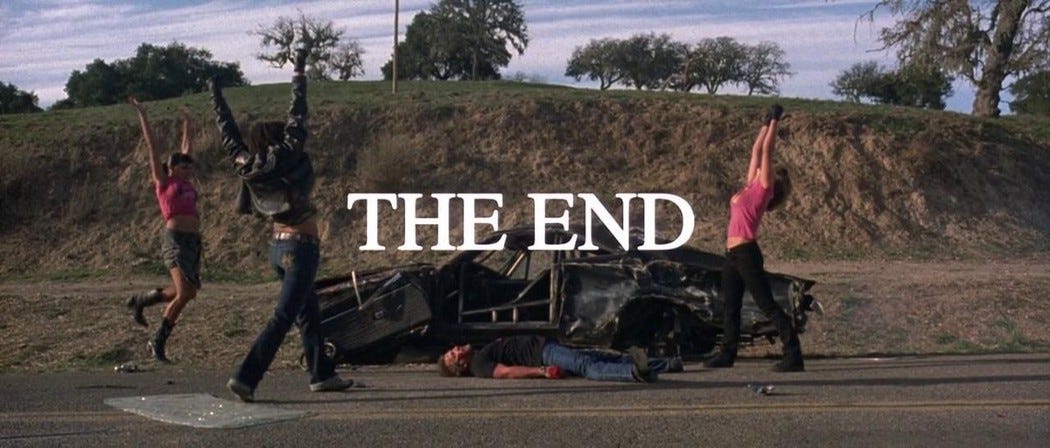
And one of the biggest sins of Death Proof is the lap dance scene, which is the narrative push throughout the first part of the film until those female characters are killed. The female character does perform it willingly, although she has been called “chickenshit” if she chooses not to. And many of the people enjoying the lap dance are other women.
Isn’t a beautiful woman allowed to use her sexual power without being deprived of her integrity?
Arguably, but remember that Arlene (Ferlito) was put up to it by her friends (played by Poitier and Melissa Arcaro). Her first response on learning that her friends had played this trick on her was anger and disbelief, and she opted not to do it when first asked by Stuntman Mike (but then he belittled her).

And again, she only did it because she was being called “chickenshit.”
That is not female empowerment. That is not individual sovereignty. That is bowing to peer pressure, which the film earlier pointed out — in the scene where her maybe boyfriend asks her to go make out in the care and with whom she emphasizes that she does not want to have to argue about when it is over — is not progressive.
Pastiche And/Or Double-Dipping
One of the tropes of sexist (and racist and marginalizing) language is the explicit employment of sexist terms and gestures under the cover of humor or pointedly-conscious display.
In other words, I can use this derogatory term because I am pointing out that it is derogatory when I am using it. Like the B word, which is bandied about liberally by numerous characters in Death Proof.
Another is rooted in the appeal to “realism”: I’m allowed to use this term because women and men frequently have used it or do use it, such that it is excepted from general prohibition for that sake.
Tarantino’s entire oeuvre is pastiche, if not his very raison d’etre! And Death Proof is pastiche eat-your-heart-out. And pastiche in this film enables the author to traffic in both of these forms of sexism.
The very film begins by gazing lovingly on Poitier’s long legs and then her ass as she walks over to the window. What’s more, almost all of the dialogue concerns boyfriends and what these women will or will not do with their sexual partners.
I opine that Tarantino’s Death Proof double-dips: that it marks out sexist language and imagery as much as it trades in them. Which to be clear is not an especially interesting or provocative opinion.
Why Am I Writing This?
Part of the reason I’m writing about it is because I am at least interested in the way that Tarantino imagines female characters. Apart from what he says, his films do give female characters a slightly more compelling treatment than do most Hollywood films. And he clearly has something that he thinks about mothers, note the function of the scene in which Beatrix learns she is a mother (as well as Abernathy’s being required to “sit in the back” during the ship’s mast stunt).
In the end, I’m not sure that Tarantino’s work is feminist, and I cannot imagine few who would say otherwise. But his work has had significant effects on the film industry since the 1990s and that makes it worthy of consideration, even if in passing.
Let’s Not Forget About the Industry!
Remember that apart from cinematic representations, there is a powerful industry at work that has taken advantage of these representations all the way to the bank, as well as empowering those who were willing to do so.
The person who assisted Tarantino through each step of his career is the sexual predator Harvey Weinstein. Tarantino has apologized for not acting on what he knew. But I would say that this issue is more serious, that he didn’t just miss the mark.
Why didn’t Tarantino part ways with the Weinstein group earlier? Surely he could have found the same artistic freedom and executive powers with other production companies. Perhaps he feared what Weinstein would do … Well, let’s ask Rose McGowan what she thinks about that.