
Can you believe that it’s March already!!!
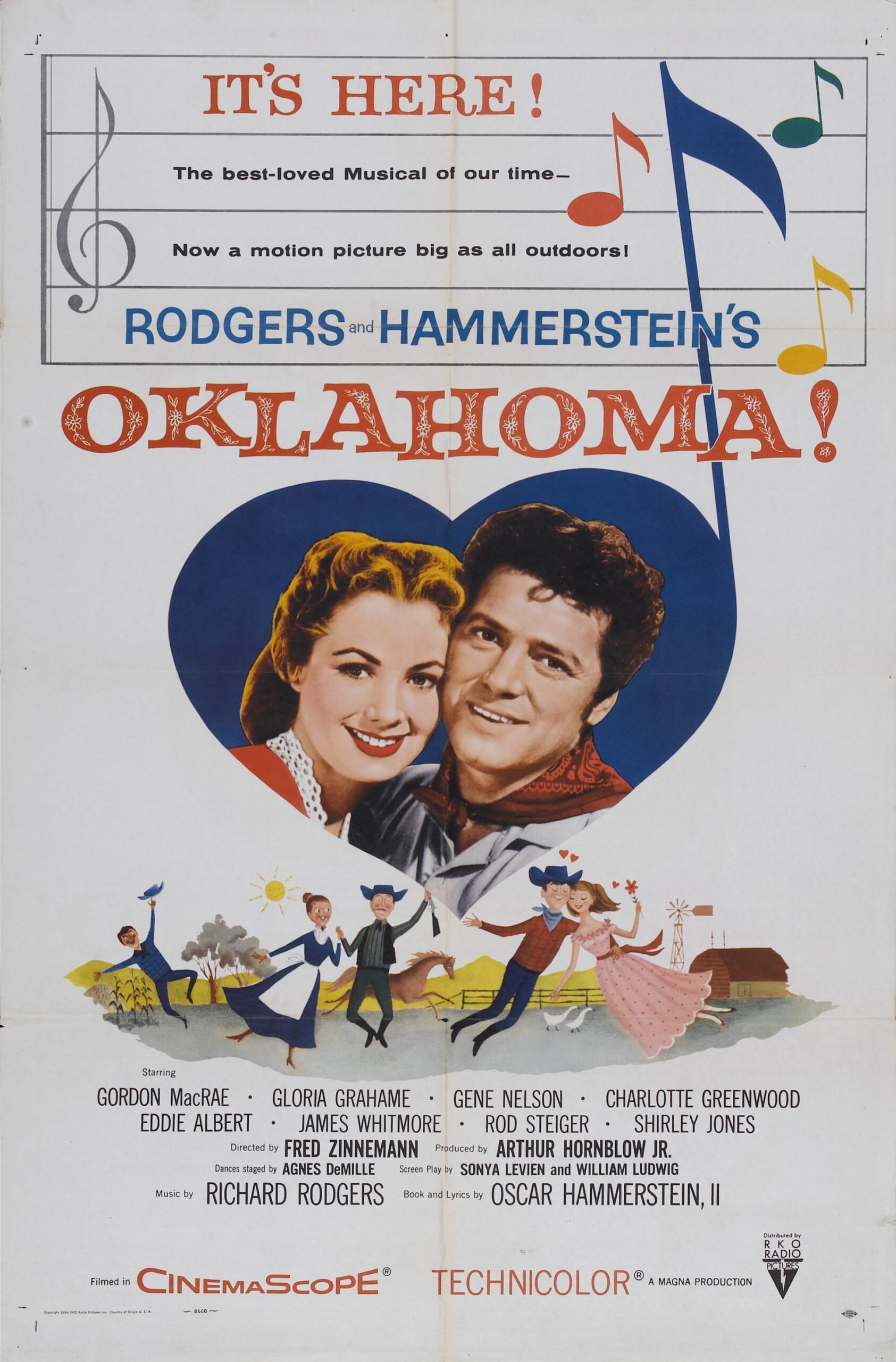
During February I had the pleasure to watch Oklahoma!, which I confess I’d never before seen (to my shame!); the first two episodes of Reservations Dogs; and Millions. I read Sir Arthur Conan Doyle’s “A Study In Scarlet”, Euripides’ Alcestis, and a short story by Robert Aickman.
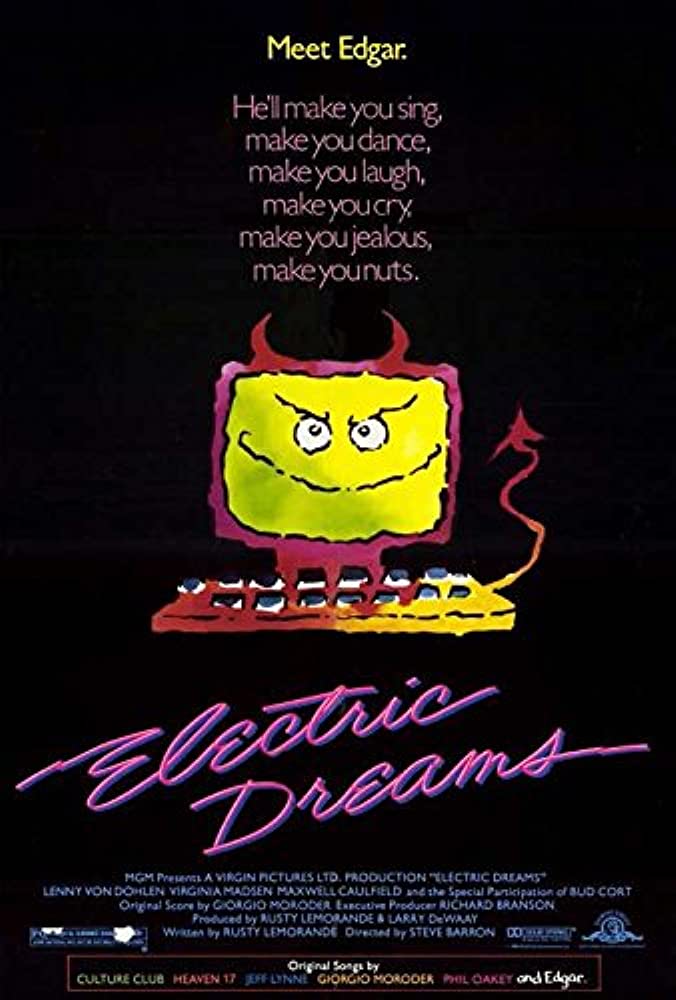
However, I also saw some complete and total rubbish, like parts of Electric Dreams and Kong x Godzilla. The last one was so dumb they couldn’t even use English to craft a title for it …
Am excited about reading more Aickman. And seeing Oklahoma! again.
Did you know that was Gloria Grahame?! 5 years after making In a Lonely Place!!!

February 1
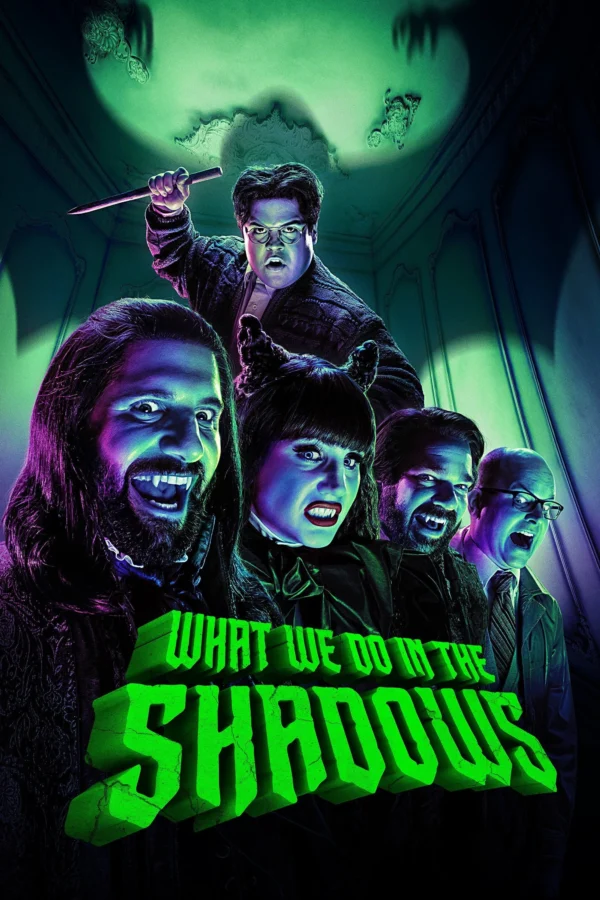
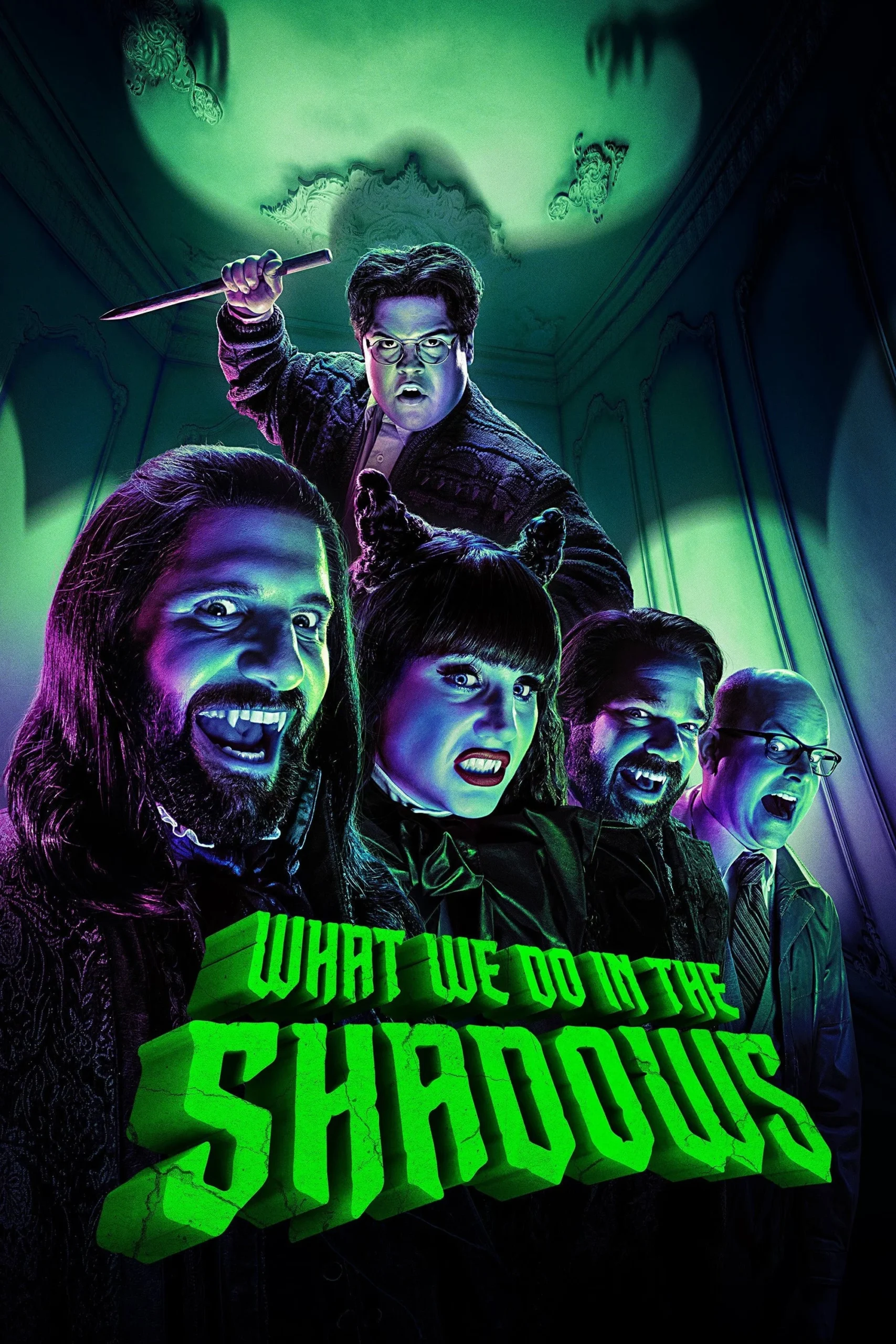
— What We Do in the Shadows (2019), “Pilot”
Directed by Taika Waititi; written by Jemaine Clement.
Starring Kayvan Novak, Matt Berry, Natasia Demetriou, Harvey Guillén, and Mark Proksch.
Aired on FX on March 27, 2019.
— What We Do in the Shadows (2019), “City Council”
Directed by Jemaine Clement; written by Paul Simms.
Aired on FX on April 3, 2019.
Last month?
Watched the movie on which this series was based and that’s pretty hilarious. M suggested this as well, and it has all the earmarks of Taika Waititi.
The second episode, “City Council”, was especially funny.
— Hegel, Aesthetics: Lectures on Fine Art, Vol. II, “Historical Deduction of the Concept of Art”
February 4
— Elaine Terranova, “Introduction to Iphigenia in Aulis” in Euripides 3: Alcestis/Daughters of Troy/The Phoenician Women/Iphigenia at Aulis/Rhesus
February 5
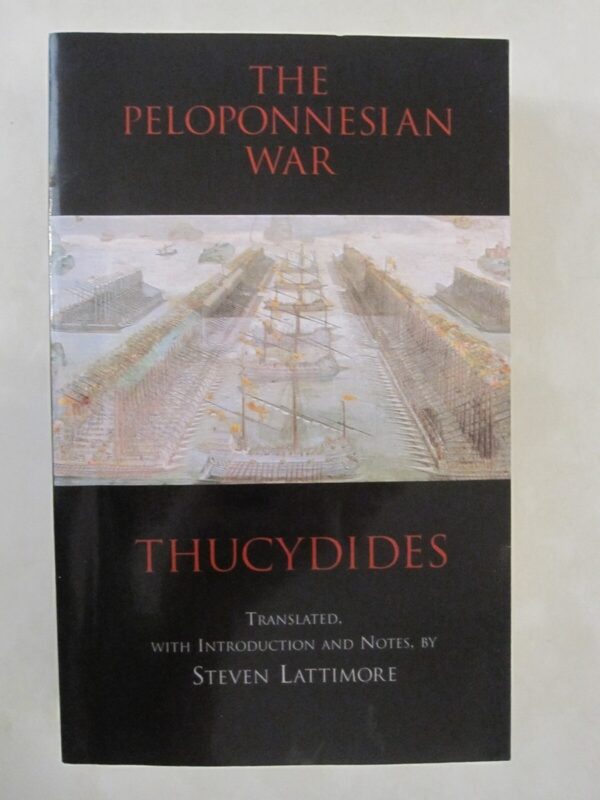
— Thucydides, The Peloponnesian War, Book 2, 10 pp.
Reading Philip Vellacott’s introductions to Euripides led me to remind myself what happened during the Peloponnesian War and in particular the crimes that Athens committed during the war, in particular the results of the Siege of Melos.
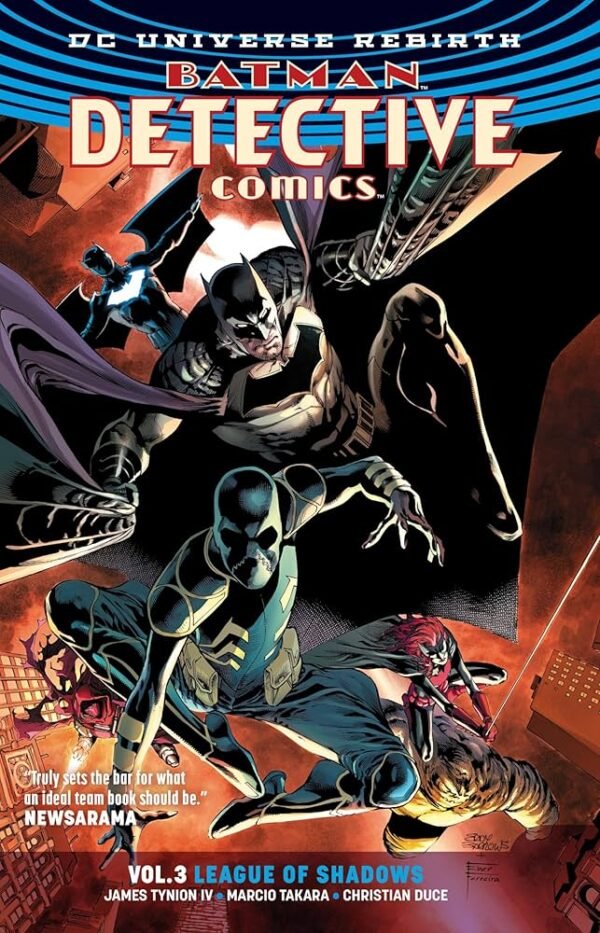
— Batman: Detective Comics, Vol. 3 The League of Shadows
Since I had seen the Christopher Nolan Dark Knight trilogy
I’d been curious about this backstory, concerning Bruce Wayne’s relation to the League of Shadows and Ra’s al Ghul’s apparent mentorship?
But it appears that there is no correlate in the comic book series.
In truth, although I’m curious following an earlier interest in comic books, like I was with the X-Men, now reading these is almost invariably boring. I find myself skimming the text and looking at the picture, but certainly not reading it with the kind of attention I would give to nearly anything else.
Some kind of waiting for my attention to be captured …
February 6
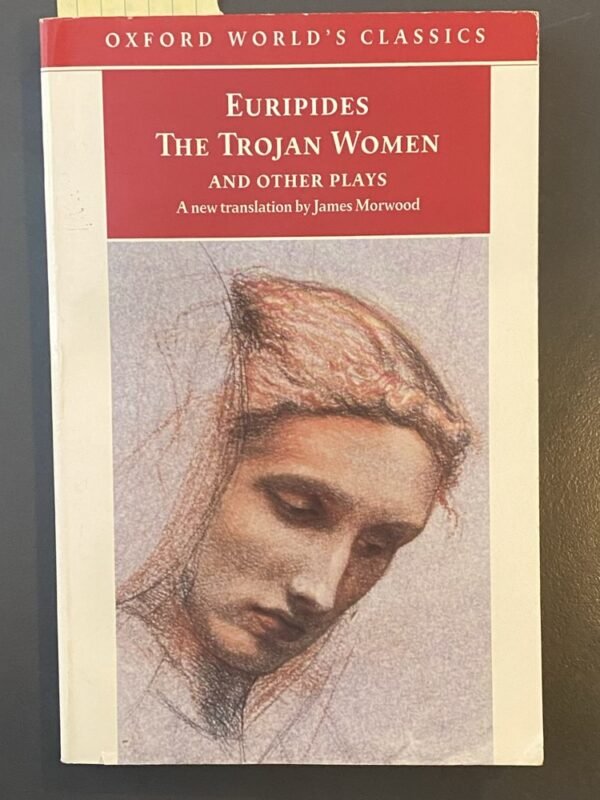
— Edith Hall, introduction to Euripides, The Trojan Women and Other Plays
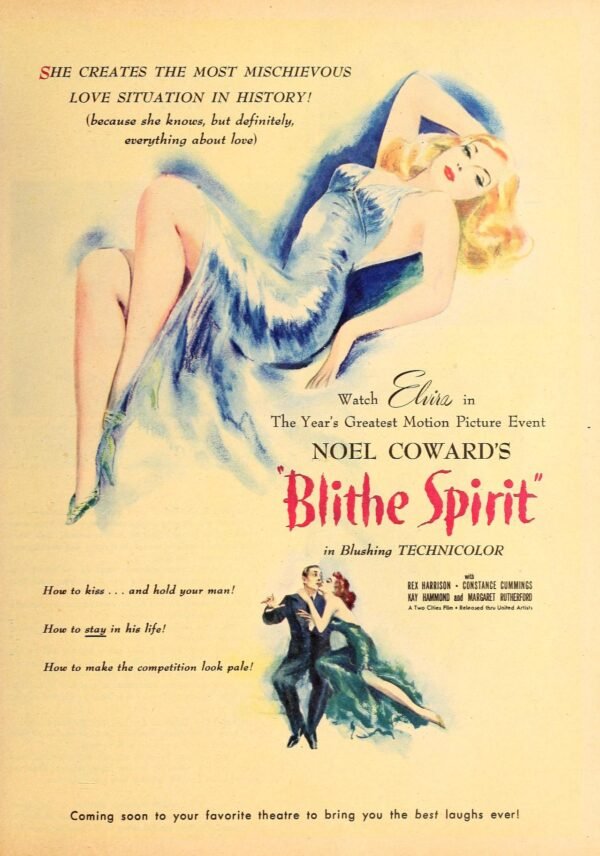
— Blithe Spirit (1945), last hour
Directed by David Lean; written by Noël Coward, based on his play Blithe Spirit.
Starring Rex Harrison, Constance Cummings, Kay Hammond, Margaret Rutherford, and Joyce Carey.
Released in the United Kingdom on March 15, 1945.
What’s this movie about?
I’d never seen this before. David Lean’s name became one that I paid attention to after seeing Brief Encounter (1945), which as you may know is quite celebrated and with good reason.
Whereas Blithe Spirit appeared on the broadcast movies channel, meaning that my viewing experience was punctuated by commercials about life insurance and home insurance. Do I need to start worrying about final costs?!
In the film, the ghost of a dead wife begins haunting her remarried widower husband, but only he can see her (not his new wife).
It’s a comedy …

— Electric Dreams (1984), first half hour
Directed by Steve Barron; written by Rusty Lemorande.
Starring Lenny von Dohlen, Virginia Madsen, Bud Cort, and Maxwell Caulfield.
Released in the United States on July 20, 1984.
One word:
Bud Cort as the voice of the computer. Although honestly I could not sustain watching to the point where I could hear this.
RIP Bud Cort (1948-2026). You haven’t seen Harold and Maude (1971) !!!!????
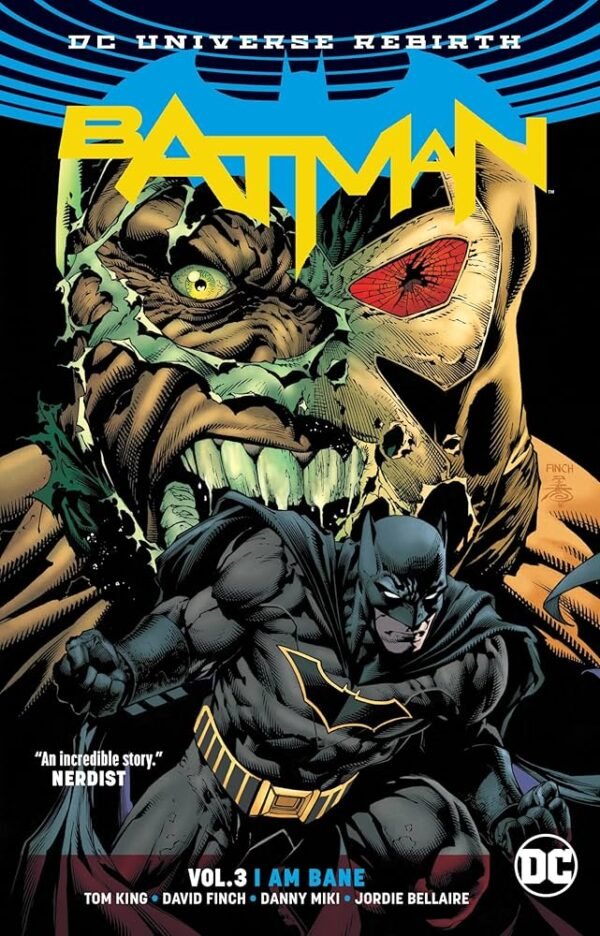
— Batman: Vol. 3 I Am Bane
Ditto what I said above. I mean, yeah, there’s a tie in to the Christopher Nolan movies. I wish I could say that still meant something to me.
February 7
— History’s Greatest Mysteries (2020-), S2E1 “Expedition Bermuda Triangle“
Hosted and narrated by Laurence Fishburne.
Aired September 7, 2021 on History.
And we learn ….
Don’t bother. Nothing new discovered. As much as I hate to say it, a big nothingburger.
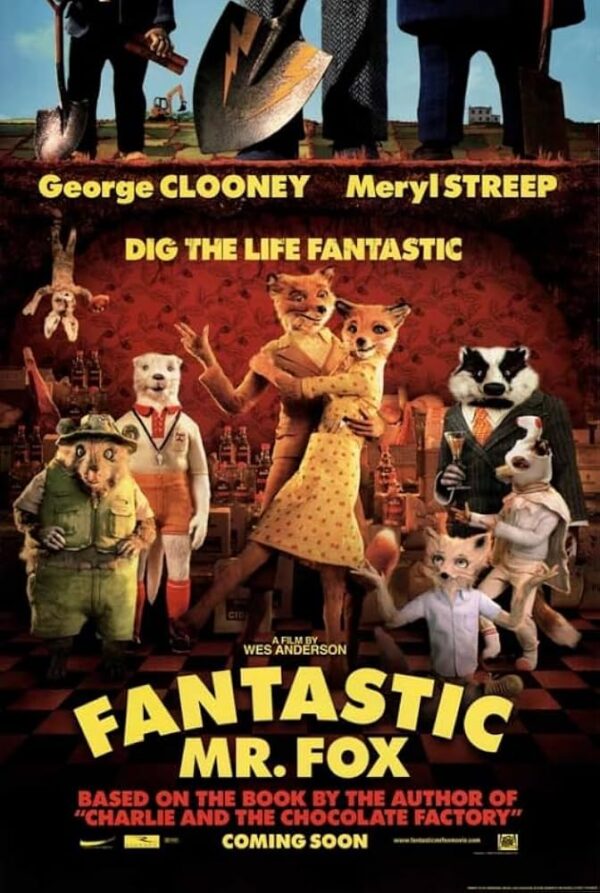
— Fantastic Mr. Fox (2009)
Directed by Wes Anderson; screenplay by Wes Anderson and Noah Baumbach, based on the novel by Roald Dahl.
Starring the voices of George Clooney, Meryl Streep, Jason Schwartzman, Bill Murray, Willem Dafoe, and Owen Wilson.
Released in the United States on November 13, 2009
Am I getting too old to enjoy Wes Anderson films? The funniest part was the way that they ate. And Willem Dafoe’s character.
February 9-10th
— Euripides, Alcestis
This is such a strange play, as the introduction to it freely admits, a sort of anti-tragedy, in which the crisis begins and is resolved in the course of the play.
But note that Alcestis does not speak when Hercules passes her on to Admetus.
And, man, how Admetus is emasculated. I mean, with justification. But still.
February 12
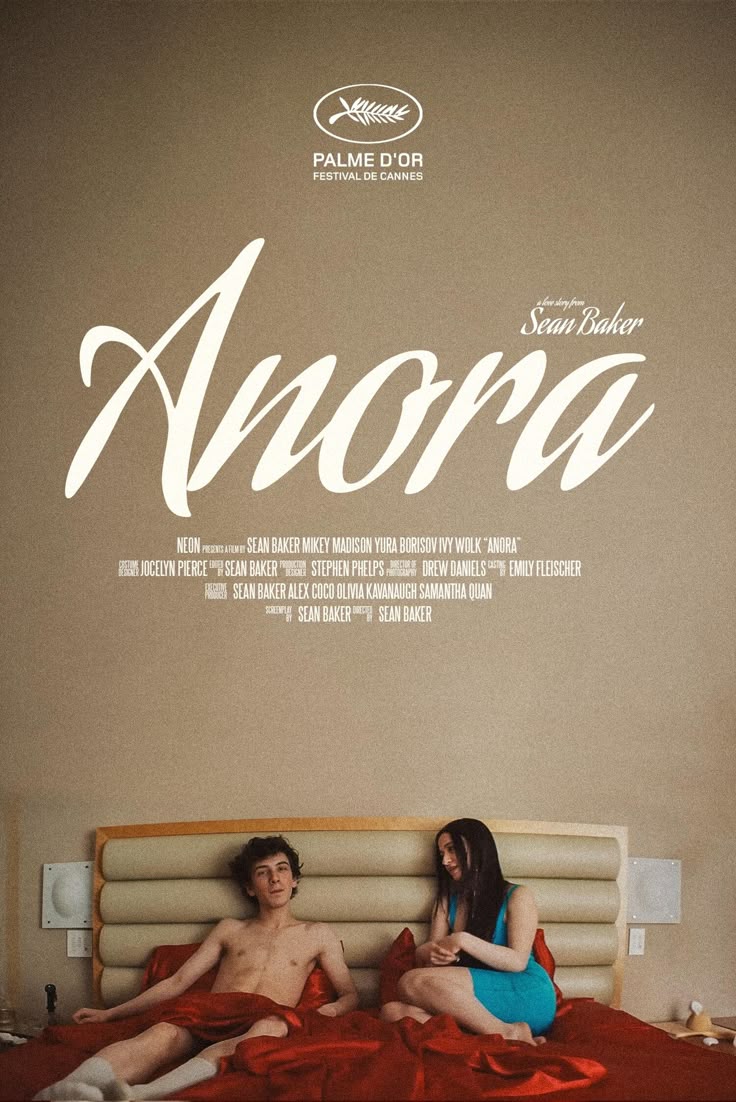
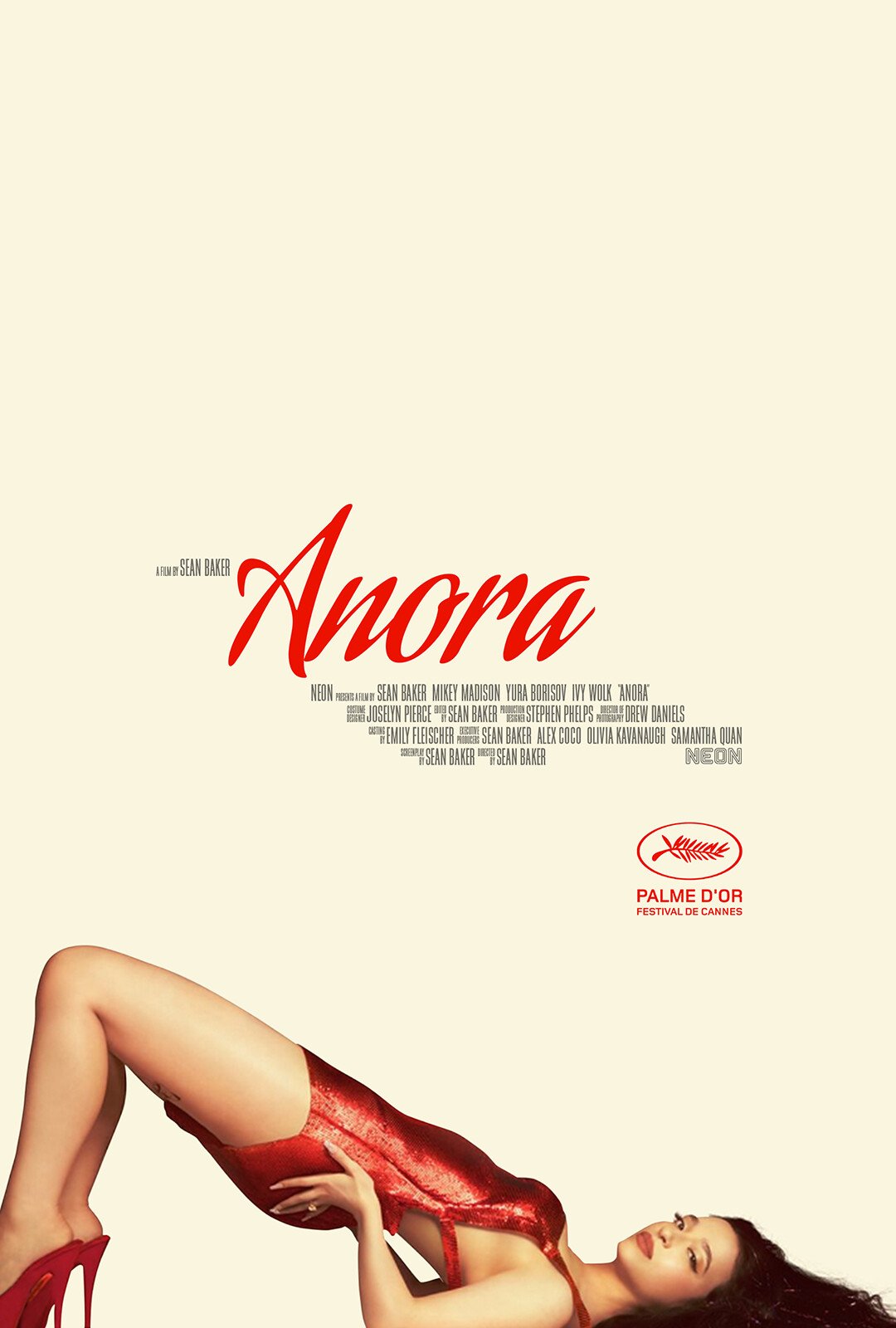
— Anora (2024)
Directed by Sean Baker; screenplay written by Sean Baker. Starring Mikey Madison, Mark Eydelshteyn, Yura Borisov, Karren Karagulian, and Aleksei Serebryakov.
Released in the United States on October 18, 2024. At the 77th Cannes Film Festival it won the Palme d’Or, and Best Picture, Best Director, Best Actress (Madison), Best Original Screenplay, and Best Film Editing at the 97th Academy Awards.
Why did you watch this?
Had been meaning to see it as it was a winner of both the Palme d’Or and several Academy Awards. The latter are by no means the mark of quality (i.e., Titanic anyone?, which while entertaining and grand, is also tripe).
I am not sure that I think it’s worthy of all of this hullabaloo, although I do admit to being generally charmed by it. It was however better than Dune Part Two. But maybe not Emilia Pérez.
February 14
— Arthur Conan Doyle, The Complete Sherlock Holmes, “A Study In Scarlet”, 36 pp.
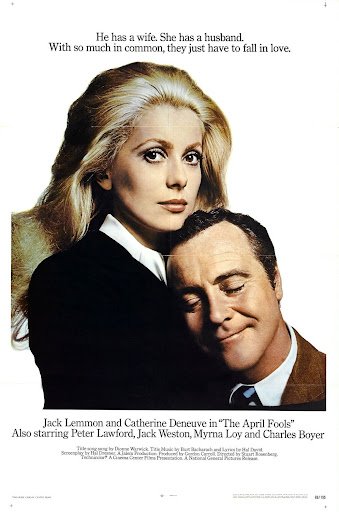
— The April Fools (1969), 95 minutes.
Directed by Stuart Rosenberg; screenplay by Hal Dresner, based on the novel by Howard Fast. Starring Jack Lemmon, Catherine Deneuve, Peter Lawford, and Myrna Loy.
Released in the United States on May 28, 1969.
Watched the last hour.
Just want to make sure I understand this: Catherine Deneuve has fallen in love with Jack Lemmon?
The final scene, with them reunited in the airplane, is telling: there is absolutely no chemistry. She looks away from him more than once after she realizes he’s sitting beside her … you don’t do that when you’ve fallen in love. And no one needs to tell Catherine Deneuve that.
I started watching this
For the scene where Lemmon and Jack Weston (Jack Weston?! really?!) are in a bar and talking about falling in love and Lemmon’s character asks Weston’s if he’s ever experienced anything like this and then Weston starts to answer him. Lemmon interrupts and then Weston stops him and says can I finish my story.
February 15
— Three Coins in the Fountain (1954), 102 mins.
Directed by Jean Negulesco; screenplay by John Patrick, based on the novel by John H. Secondari. Starring Clifton Webb, Dorothy McGuire, Jean Peters, Louis Jourdan, and Maggie McNamara. Released in the United States on August 20, 1954.
Watched the middle part (film is structured into 3 parts).
February 16
— Deleuze, Cinema 2: The Time Image, 1 p
Woke up and started thinking and then started reading this passage from the conclusion of two volumes on Cinema. And there is a reasonable question if they are in fact “cinema’s concepts.”

— Godzilla x Kong: The New Empire (2024), 30 mins.
Directed by Adam Wingard; screenplay by Terry Rossio, Simon Barrett, and Jeremy Slater. Starring Rebecca Hall, Brian Tyree Henry, Dan Stevens, Kaylee Hottle, and Alex Ferns. Released in the United States on March 29, 2024.
Dan Stevens gave up being in Downton Abbey so that he could eventually star in this piece of crap? Rebecca Hall, what the hell are you doing?
Stevens’ character’s introduction comes when he pulls out Kong’s bad tooth, replacing it with one made out of … something. He was indistinguishable from any other Hollywood bro, riding in on a sort of crane.
February 17
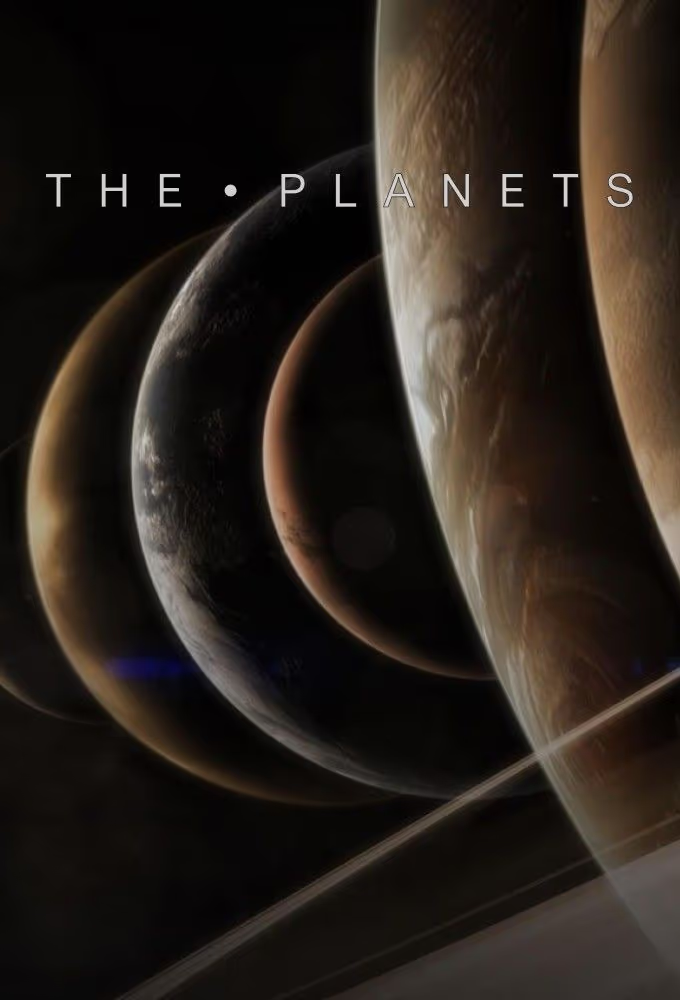
— NOVA, “The Planets: Jupiter”
Directed by Stephen Cooter. Starring Zachary Quinto (voice) and actual scientists.
Aired July 31, 2019 on PBS.
Jupiter was a rogue before the creation of the Earth moving through what is now the Kuiper belt, but its movements probably are what led to the development of water and hence life on earth.
What interested me was what the guy from California said about how the orbit of Jupiter is regular now because of course I couldn’t help but think how do we know that it’s regular now does regular now just mean that we haven’t had enough time to observe regularity or anomaly?
And apparently Ceres could’ve been a planet.
I also think one of the commentator was saying that Jupiter is older than the sun?
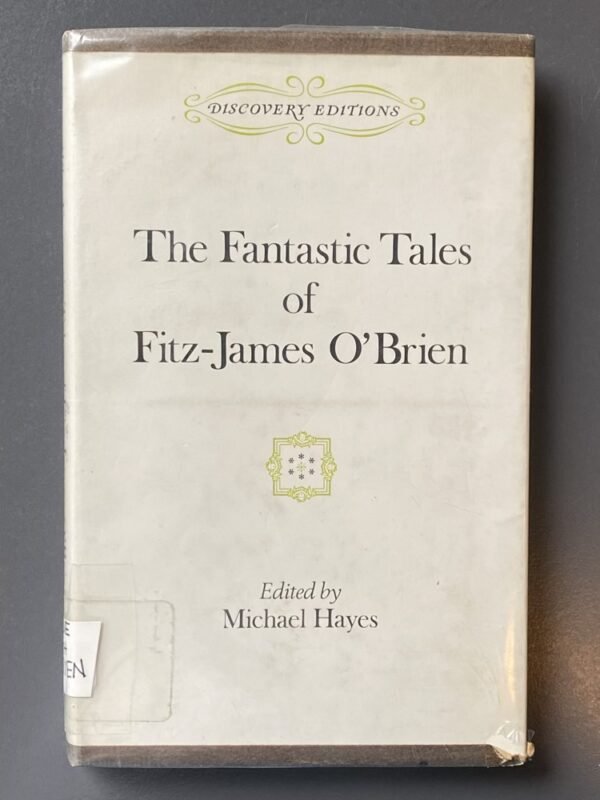
— Fitz-James O’Brien, The Fantastic Tales of Fitz-James O-Brien, “The Diamond Lens”, 20 pp.
Would you like a little bit of antisemitism with your fantastic stories?
Requested this from Interlibrary Loan at the Free Library and then the intention was swept from my mind, never to return. But the book appeared.
“The Diamond Lens” is peculiar, to be sure. A story about a microscopist.
February 18
— Complete Sherlock Holmes, “A Study in Scarlet,” Chapter 4: Advertisement Brings a Visitor
February 19
— Finished O’Brien, “The Diamond Lens”
The primary character does not lose any sleep over taking the life of the Jew …
— Stanislav Lem, Solaris, 10 pp.
Like everyone else, I was amazed by Tarkovsky’s Solaris (1972) [but not by its remake by Soderbergh (2002)]. And so I was pleasantly surprised to learn that a novel by Lem, who I have also admired at a distance, was the film’s inspiration.
February 20
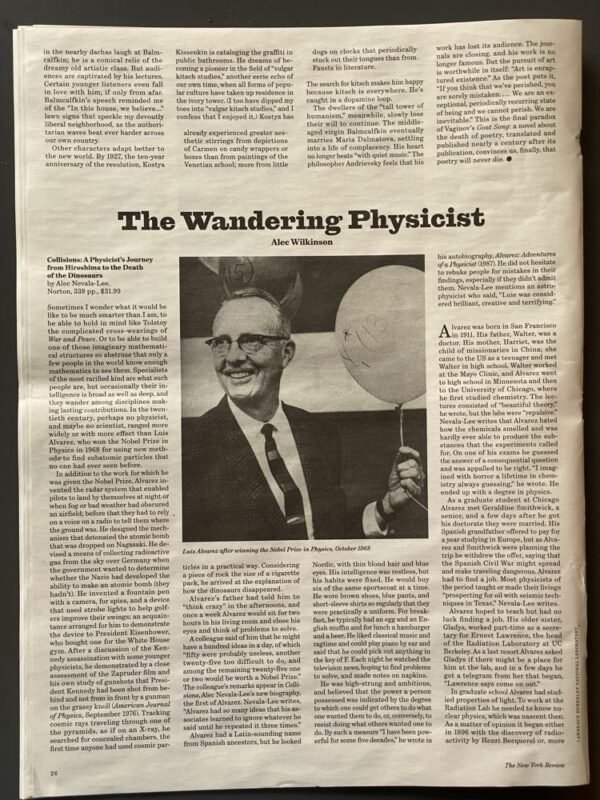
— Alex Wilkinson, “The Wandering Physicist”, New York Review of Books.
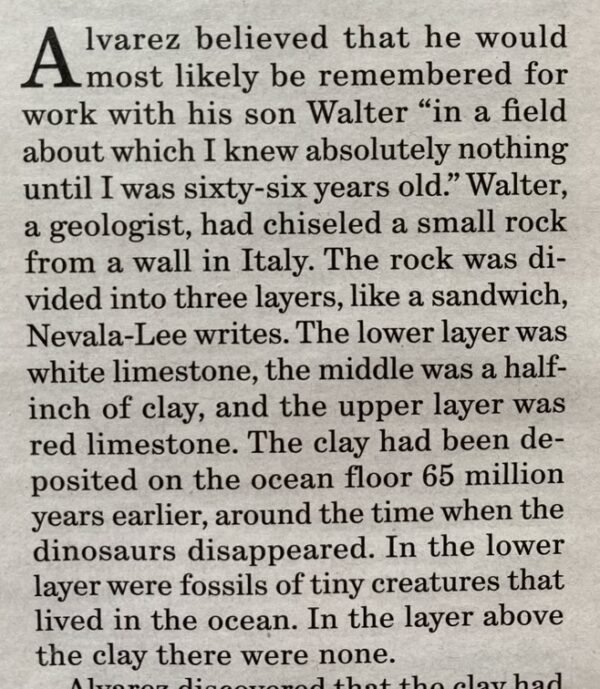
This is a review of a recent (and first) biography of Luis Alvarez, the reference to which on the cover piqued my interest.
I thought to myself, this is the guy who discovered the demise of the dinosaurs, some physicist who was famous for that, namely, a discovery in a field outside of his specialty.
To my credit, even Alvarez had countenanced such a possibility, except that he thought it would be for his contribution to archeology, namely, that the pyramid of Cheops must have an internal chamber like those of its predecessors.
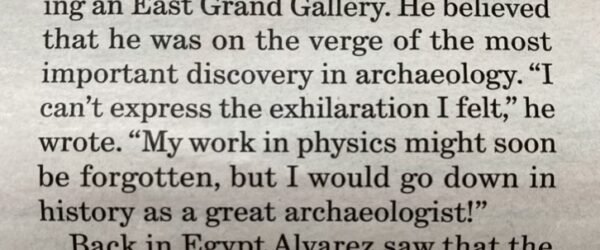
He was wrong about that — so far as we know — and I was wrong about him. In fact, Alvarez had already won the Nobel Prize in the field of physics.
February 21

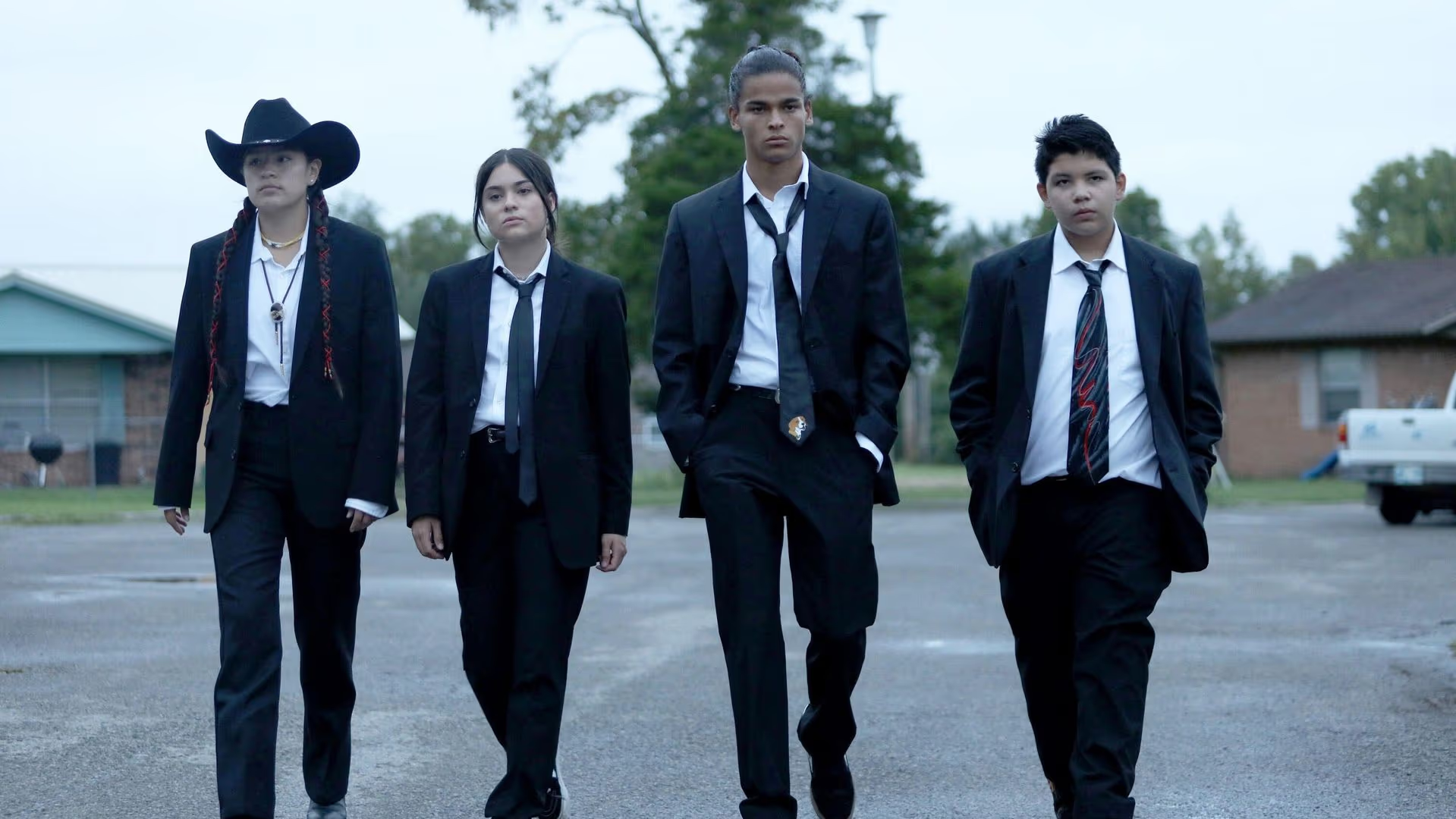
— Reservation Dogs (2021–2023), Season 1, Episode 1 “F*ckin’ Rez Dogs ”, aired August 9, 2021 on FX on Hulu.
Directed by Sterlin Harjo and written by Sterlin Harjo & Taika Waititi.
Starring Devery Jacobs, D’Pharaoh Woon-A-Tai, Paulina Alexis, and Lane Factor.
A compelling story with a pinch of intertextuality, some sadness over a lost friend.
— Law & Order (1990–2010), Season 15, Episode 14 “Fluency,” aired January 19, 2005 on NBC.
Directed by Constantine Makris; written by William N. Fordes.
Starring Jerry Orbach, Jesse L. Martin, Dennis Farina, S. Epatha Merkerson, and Annie Parisse.
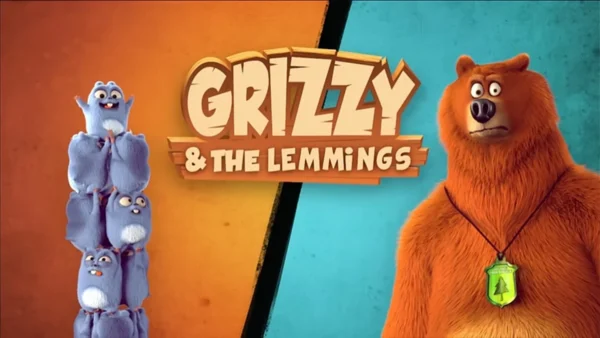
— Grizzy & the Lemmings (2016–present), passim
Created by Antoine Rodelet and Josselin Charier.
Starring Pierre-Alain de Garrigues, Josselin Charier, and David Gasman.
First aired in France on November 21, 2016.
You haven’t seen this?! Quel dommage!
It’s very formulaic and that formula is fairly obvious after two episodes. But there is something so fascinating about it.
For this I must thank Lucian.
— The Complete Sherlock Holmes, “A Study in Scarlet”, Beginning of Part 2, 3 pp.
February 22nd
— The Complete Sherlock Holmes, “A Study In Scarlet”, 10 pp.
February 26th
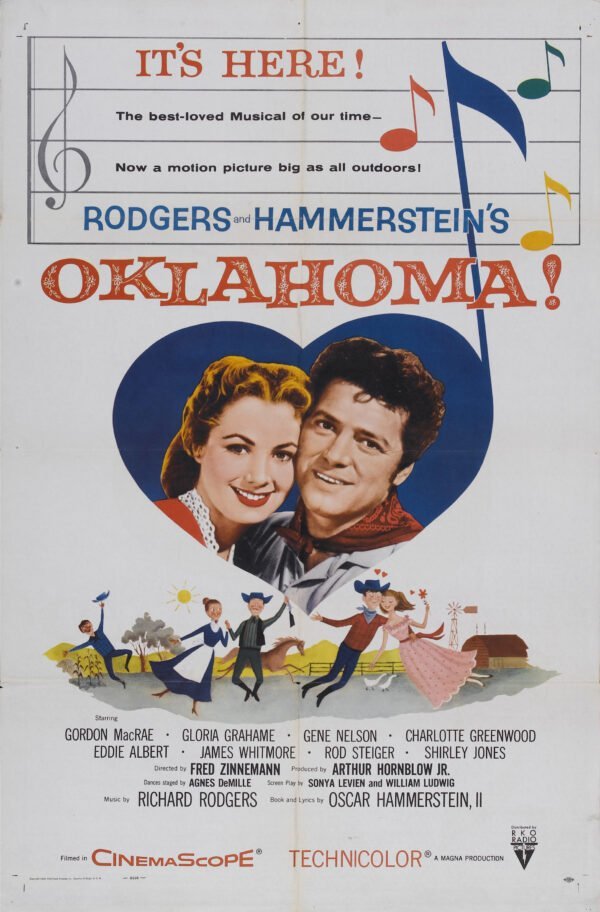
— Oklahoma! (1955), 145 mins.
Directed by Fred Zinnemann; screenplay by Sonya Levien and William Ludwig, based on the stage musical by Richard Rodgers and Oscar Hammerstein II. Starring Gordon MacRae, Shirley Jones, Rod Steiger, Gloria Grahame, Eddie Albert, and Gene Nelson.
Released in the United States on October 11, 1955.
The first thing I want to say is Mea Culpa: I cannot believe that I have not seen this before.
Secondly, it’s transfixing, from beginning to end, such that 2 hours and 30 minutes do not seem like as much.
February 24nd
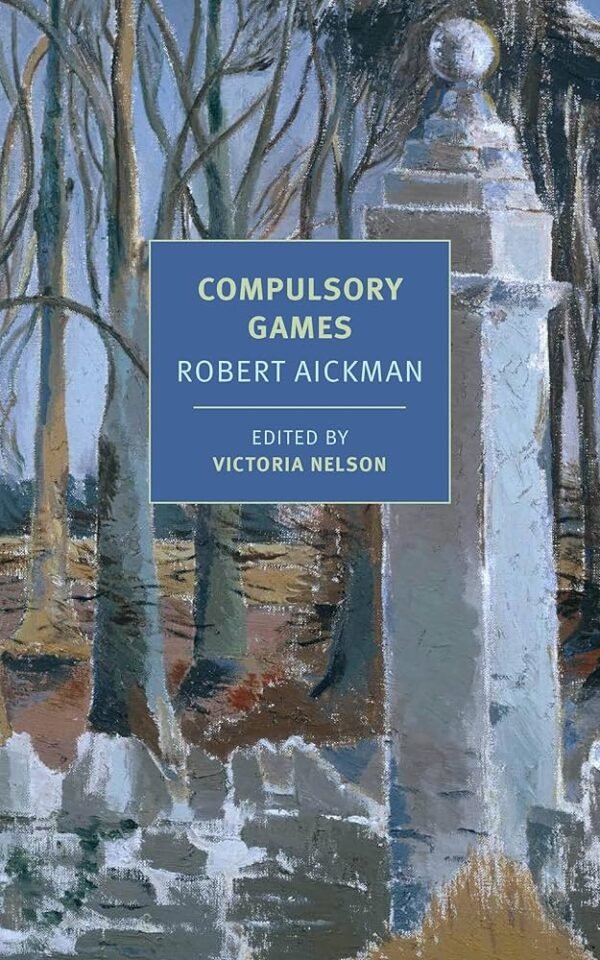
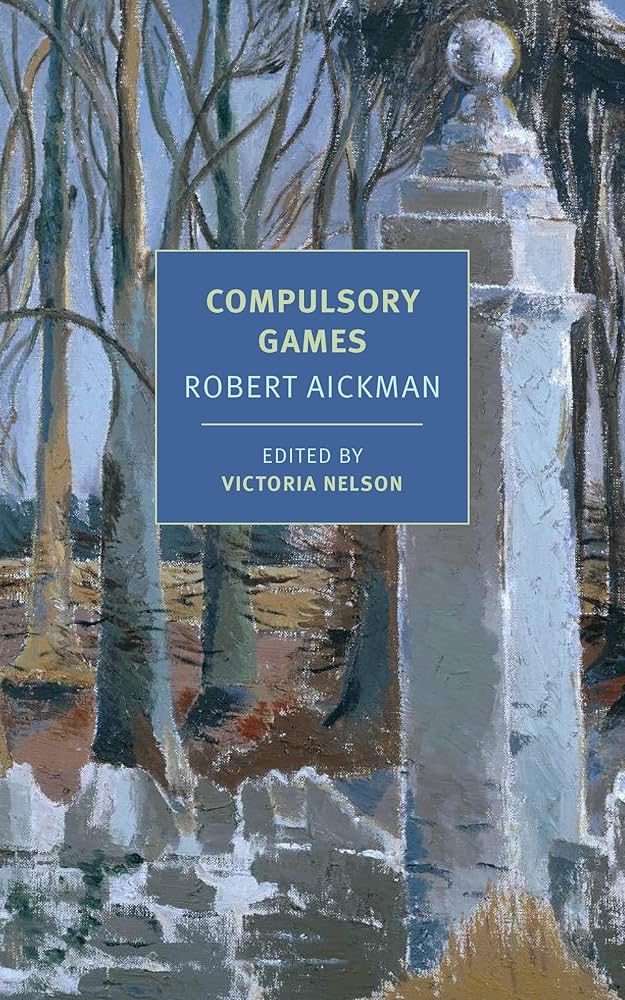
— Robert Aickman, “Compulsory Games” in Compulsory Games
Picked this up browsing through the shelves at the Free Library, in the horror section. Mostly my eyes just idly scanned the titles until I saw an NYRB imprint. And I wondered, why would the NYRB be publishing something in the horror genre?
The title story is peculiar and fascinating. It deserves more than a single reading.
February 27th
— Death Proof (2007), 113 mins.
Written and directed by Quentin Tarantino. Starring Kurt Russell, Zoë Bell, Rosario Dawson, Vanessa Ferlito, Sydney Tamiia Poitier, Tracie Thoms, and Mary Elizabeth Winstead. Released in the United States on April 6, 2007, as part of the double feature Grindhouse.
Only watched the first 15 minutes of this. M preferred not to and I acceded to her wishes.
I have not seen this film before, just as I have not seen Grindhouse. Since I’ve seen everything else by Tarantino and consider his oeuvre a formative moment in my film education, this seems to require some explanation.
What I saw of the first 15 minutes confirmed my expectations: female characters engaged in typical Taratino-esque dialogue (qualifications insisted upon, conventional wisdom gainsaid,, expletives freely sprinkled, etc.).
What I still adore about Jackie Brown is, I think, absent from this film. The female characters are indeed three-dimensional, but in a shallow, meaningless, southern California way.
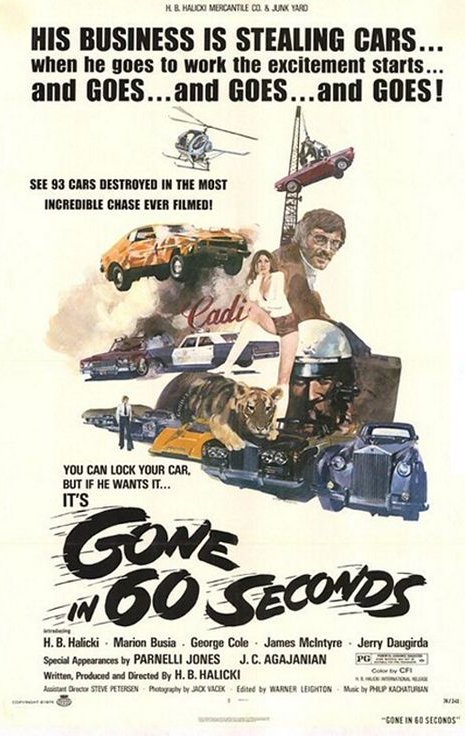
— Gone in 60 Seconds (1974), 105 mins.
Directed and written (and driven) by H. B. “Toby” Halicki.
Starring H. B. Halicki, Marion Busia, Jerry Daugirda, and James McIntyre.
Released in the United States in 1974.
Watched this with M and she pointed out that the film’s editing is pretty choppy, which I have to admit I did not notice before. Of course, I noticed and celebrated the horrible acting and the beyond absurd chase sequence — which to be honest is really what the entire movie really is, everything else is just leading up to it.
February 28th
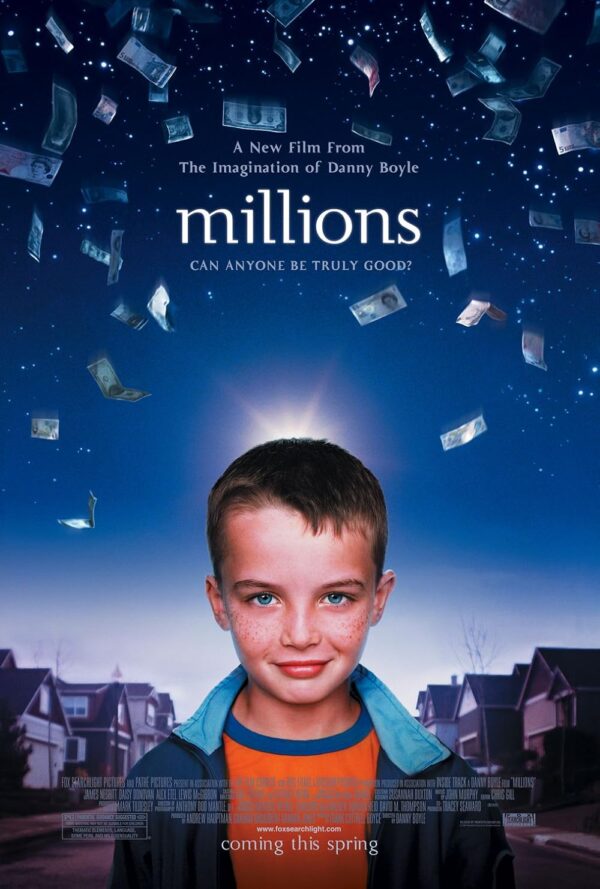
— Millions (2004), 95 min.
Directed by Danny Boyle; screenplay by Frank Cottrell-Boyce, based on his novel.
Starring Alex Etel, Lewis Owen McGibbon, James Nesbitt, Daisy Donovan, and Christopher Fulford.
Released in the United Kingdom on March 25, 2005.
Get the feeling that Danny Boyle’s fascinated by the fantasy of acquiring tons of money?
Regardless, this is an excellent film, particularly with our hilarious saint-obsessed protagonist, Damian.
The ending seemed uninspired and the moral quandary unsuccessfully resolved. But certainly better than Ant-Man
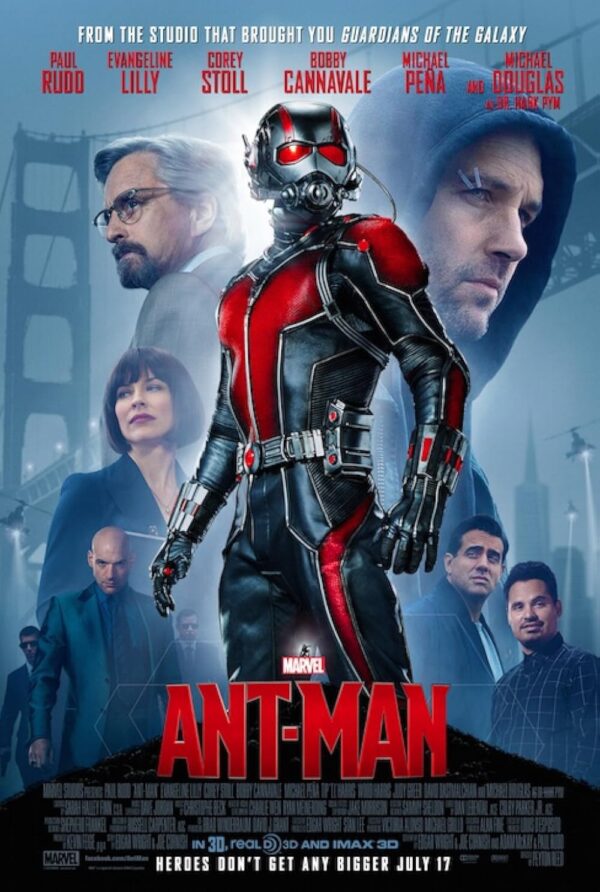
— Ant-Man (2015), 117 min.
Directed by Peyton Reed; screenplay by Edgar Wright, Joe Cornish, Adam McKay, and Paul Rudd.
Starring Paul Rudd, Evangeline Lilly, Corey Stoll, Bobby Cannavale, Michael Peña, and Michael Douglas.
Released in the United States on July 17, 2015.
The best thing about this film is undoubtedly Michael Peña, although I suspect he had a couple of instances where he took pause on the characterization he was making.
Even Michael Douglas is kind of wooden in this, and all he needs to do is be perplexed and stupified by Rudd and Peña’s characters’ actions.